Rescue Tech Spotlight: PawBoost and Lost Pet Reunification Systems
For shelters, rescues, and pet owners, lost pet recovery sits at one of the most urgent intersections in animal welfare. In fast-moving environments such as Nevada and the Las Vegas Valley, where intake volumes are consistently high and pets can move quickly between neighborhoods, timing often determines whether a pet is reunited or remains missing.
Rescue Tech Spotlight
PawBoost operates within this space as a multi-channel lost pet recovery platform designed to increase visibility across both public networks and shelter intake systems. Rather than replacing existing infrastructure used by shelters and rescues, it functions as an additional layer of distribution and matching designed to accelerate reunification.
Why Lost Pet Recovery Can Be Challenging
Lost pet recovery is rarely contained within a single system. One of the most consistent challenges across shelters, rescues, and public reporting is fragmentation. A missing pet may be reported by an owner on social media, entered into a shelter management system as a stray intake, and simultaneously searched for through microchip databases, yet none of these pathways are automatically connected.
Shelters and rescues, including high-volume organizations such as The Animal Foundation, often operate through shelter management systems like PetPoint, Chameleon, and ShelterBuddy. These systems are essential for intake tracking and case management, but they are not inherently designed to broadcast lost pet visibility back to the public at scale.
Layered on top of this distribution challenge is timing. Clayton Gladieux, CEO and co-founder of PawBoost, emphasized a key behavioral reality:
Over 80% of dog reunifications happen within the first three days.
That early window places pressure on visibility speed, data accuracy, and how quickly information moves between the public and shelter ecosystems.
How Shelters, Rescues, and Pet Owners Use It
For shelters and rescues, PawBoost operates as an external visibility and matching layer that complements existing intake systems. When a pet is logged as a stray through internal shelter workflows, that status exists within operational systems used for daily intake management. PawBoost, which is integrated via API to many of these systems then automatically extends that visibility outward through public reporting networks and matching tools designed to surface potential connections between lost reports and found animals.
In practice, shelters and rescues use the platform alongside their existing systems to increase exposure for incoming animals. This additional visibility layer can help surface potential owner matches faster when communities are actively searching across multiple platforms.
For pet owners and the public, the experience is intentionally streamlined. A single lost pet report is distributed across multiple channels, including Facebook community networks, email alerts, local search visibility, and PawBoost’s centralized database. These parallel channels are designed to ensure that sightings can surface from different points of the community and be routed back into the system for verification.
Clayton Gladieux describes the broader system simply as:
an Amber Alert system for lost pets
That framing reflects the core operational idea: rapid distribution across multiple channels to maximize visibility during the most time-sensitive phase of recovery.
Unique Features and Platform Approach
PawBoost’s structure is built around amplification rather than singular discovery. Instead of relying on one channel to surface a missing pet, the platform distributes alerts simultaneously across multiple communication pathways.
These include Facebook email-based alert systems, Nextdoor, and an internal lost-and-found database that allows incoming reports to be matched against active cases. The goal is not just reach, but overlap — ensuring that a single sighting has multiple possible pathways back to the owner.
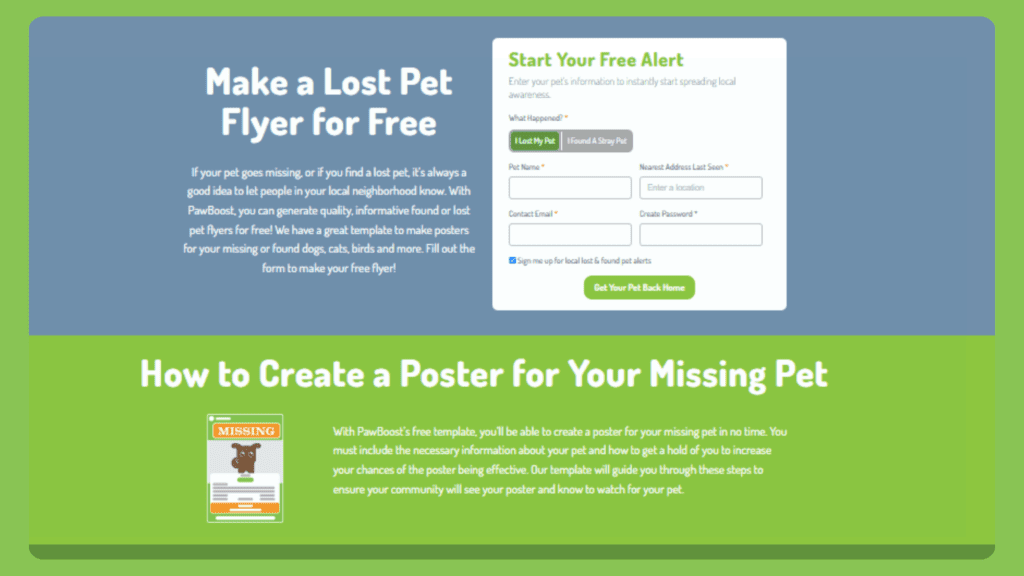
This multi-channel approach is particularly relevant in regions like Las Vegas and broader Nevada communities, where pet movement between residential, suburban, and high-traffic areas can make single-channel visibility less effective.
Funding and Business Model
PawBoost is self-funded and has operated without external investment since its founding. This structure allows the platform to prioritize long-term operational stability and mission alignment rather than investor-driven growth cycles.
The platform remains free for users, supported by optional paid visibility tools that increase exposure for individual lost pet alerts. These enhancements are designed to expand reach while keeping core functionality accessible.
Gladieux explains the balance simply:
The core experience has always been about keeping it free and effective for everyone who needs it.
Ease of Use and Cost
The platform is designed for rapid reporting, reflecting the urgency of lost pet situations. Pet owners can submit reports quickly, and those reports are immediately distributed across connected channels.
Shelters and rescues can quickly establish automated connections with their current tracking systems if they’re integrated. Those without shelter management software can utilize the platform similar to consumer users.
PawBoost operates on a hybrid funding model that balances free access with optional paid visibility features. Core lost pet reporting remains free for pet owners, shelters, and rescues, ensuring accessibility during urgent situations when speed matters most.
Optional paid features, such as enhanced visibility tools for specific listings, exist to increase exposure for individual cases while supporting platform operations. This structure allows the core reunification system to remain widely accessible while still enabling additional reach where users choose to apply it.
Core functionality remains free across all primary user groups, including pet owners, shelters, and rescues. Optional premium visibility tools are available but are not required to participate in the core lost pet reporting system.
Integration and Compatibility
PawBoost operates alongside, rather than inside, shelter and rescue management systems. Integration pathways connect with widely used shelter software such as PetPoint, Chameleon, and ShelterBuddy, which handle internal intake and animal tracking workflows.
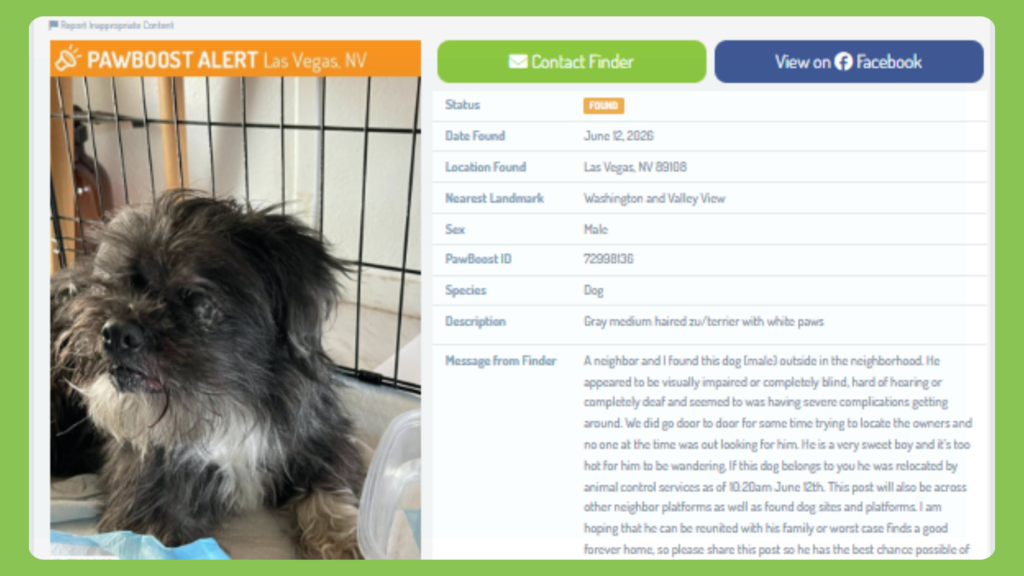
When shelters log animals as stray intakes or update status information, that data can contribute to visibility signals within the PawBoost ecosystem. This creates a complementary layer between internal shelter operations and external public reporting systems.
However, one ongoing limitation is attribution. While shelters can track outcomes such as return-to-owner or adoption within their own systems, it is not always possible to determine which external factor — microchips, shelter intake recognition, or platform visibility — ultimately led to reunification.
Scale and Local Opportunities
PawBoost operates across the United States, processing large volumes of lost and found pet reports daily. Its effectiveness depends heavily on community participation and how quickly information is shared across both public and shelter systems.
In Nevada and the Las Vegas Valley, the platform intersects with a dense ecosystem of shelters, rescues, and community-driven animal searches where rapid identification can significantly impact reunification timelines.
Our outreach included multiple Nevada-based rescues and shelters associated with platform listings, though responses were not received at the time of publication. Even so, the local opportunity remains centered on awareness, adoption of reporting tools, and integration between public and shelter-facing systems.
Potential Challenges
Despite broad reach, reunification outcomes depend on several external factors that technology alone cannot fully control. One of the most consistent challenges is data completeness, particularly when pet descriptions or location information are limited or delayed.
Another challenge is fragmentation across systems. With shelters, rescues, microchip databases, and public platforms all operating in parallel, there is no single unified source of truth for lost pet recovery.
A further limitation is attribution clarity. Because multiple systems often contribute to a single successful reunification, it can be difficult to isolate which channel had the decisive impact.
Future Features and Development
Future development areas include expanded AI-assisted matching between lost and found reports, improved image recognition for identifying pets, and deeper integration with shelter management systems to improve data flow between intake and public visibility layers.
The platform continues to focus on reducing time-to-reunification, particularly within the first critical days after a pet goes missing, where most successful recoveries occur.
PawBoost’s Perspective on Reunification Impact
At its core, PawBoost views reunification as a system-wide outcome rather than a single-channel event. Success depends on coordinated visibility across shelters, rescues, and the public, with each layer contributing to the likelihood of a match.
Clayton Gladieux has emphasized prevention as a parallel driver of outcomes, particularly microchipping and ensuring accurate, up-to-date identification for pets. While technology improves visibility, foundational identification practices remain a critical part of successful reunification at scale.
Why This Matters
Lost pet recovery technology plays a significant role in bridging gaps between public reporting and shelter intake systems. In regions such as Nevada and Las Vegas, where shelter volumes and community movement are both high, these tools add an additional layer of visibility that can meaningfully shorten reunification timelines.
While no single platform solves fragmentation entirely, systems like PawBoost demonstrate how layered communication across multiple channels can improve awareness, increase response speed, and support existing shelter and rescue infrastructure.
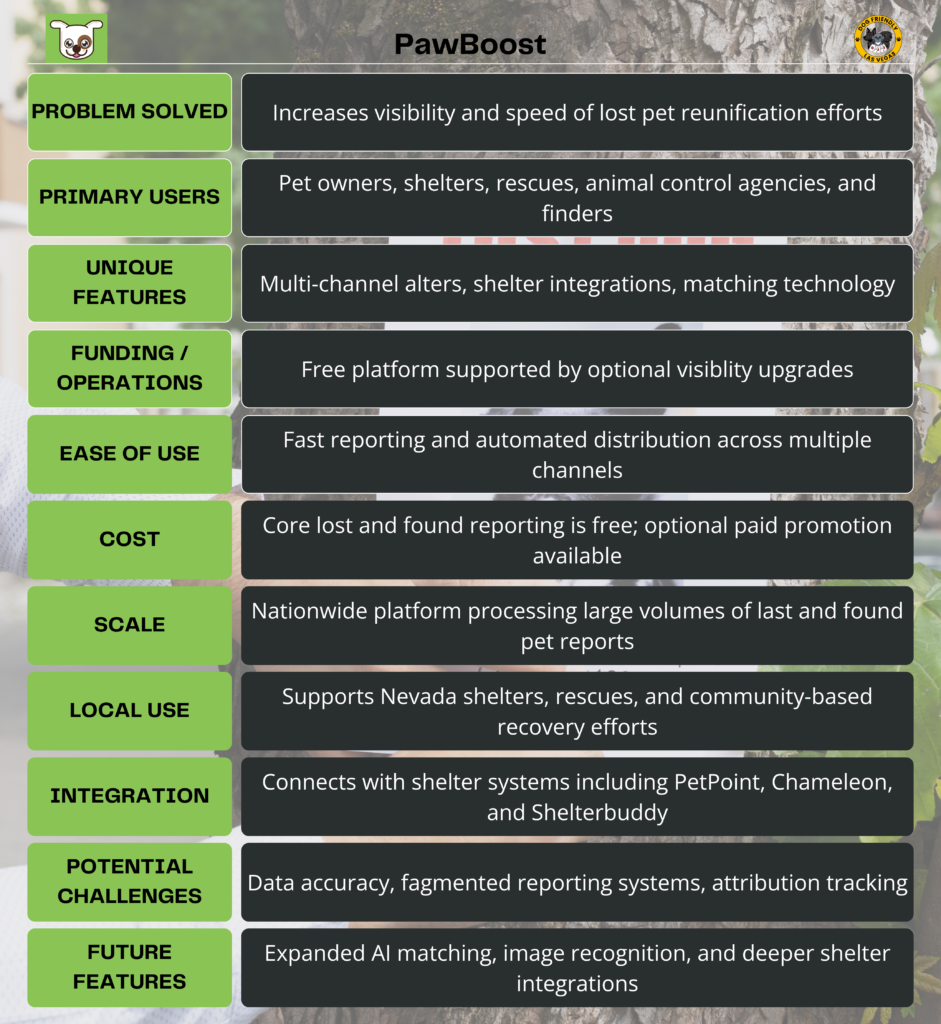
Quick View & Summary
Category: Lost Pet Recovery / Reunification Technology
Content reflects individual opinions for general information only and is not a substitute for professional care; Dog Friendly Las Vegas is not responsible for actions taken based on this content.
Never Miss a Dog Event in Las Vegas
Get the latest dog events and top stories delivered straight to your inbox.