Clark County Installs 24/7 Microchip Scanning Stations to Help Lost Pets Get Home
A lost dog or cat can be difficult to reunite with its family, particularly when the animal has no collar or identification tag. Clark County is expanding access to a tool that can help close that gap, installing free, around-the-clock microchip scanning stations at community centers so residents who find a lost pet can take the first step toward locating its owner.
Announced by Clark County Commission Chairman Michael Naft and Animal Protection Services Deputy Director Victor Zavala, the initiative is designed to make microchip scanning more accessible while helping return found pets directly to their families. The county plans to establish 15 stations in high-traffic areas where Animal Protection Services frequently responds to reports of found animals.
The stations are part of Clark County’s broader effort to strengthen pet identification and reunification, building on its microchipping requirements for dogs and cats.
Where to Find Clark County’s Microchip Scanning Stations
As of October 2026, three stations are available at community centers across the valley:
- Silverado Ranch Community Center in southwest Las Vegas
- Walnut Community Center
- Cora Coleman Senior Center in the northeast valley
The stations are free to use and available 24 hours a day, seven days a week. Clark County plans to add more locations in the coming months, with an interactive map on its Microchips webpage showing current locations as the network expands.
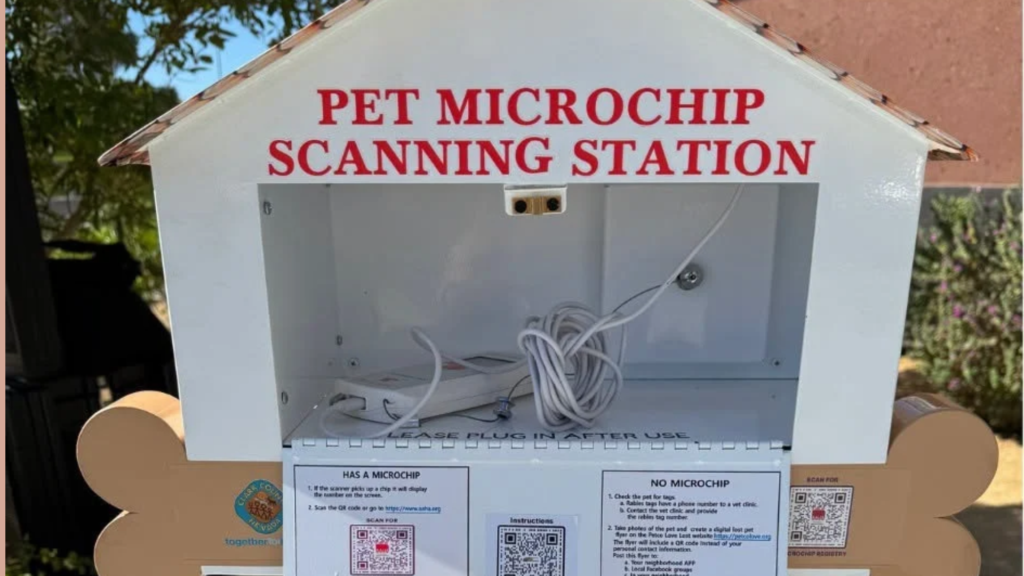
The goal is to give residents a convenient way to check a found pet for a microchip without having to first locate a veterinary office or wait for assistance.
How the Scanning Stations Work
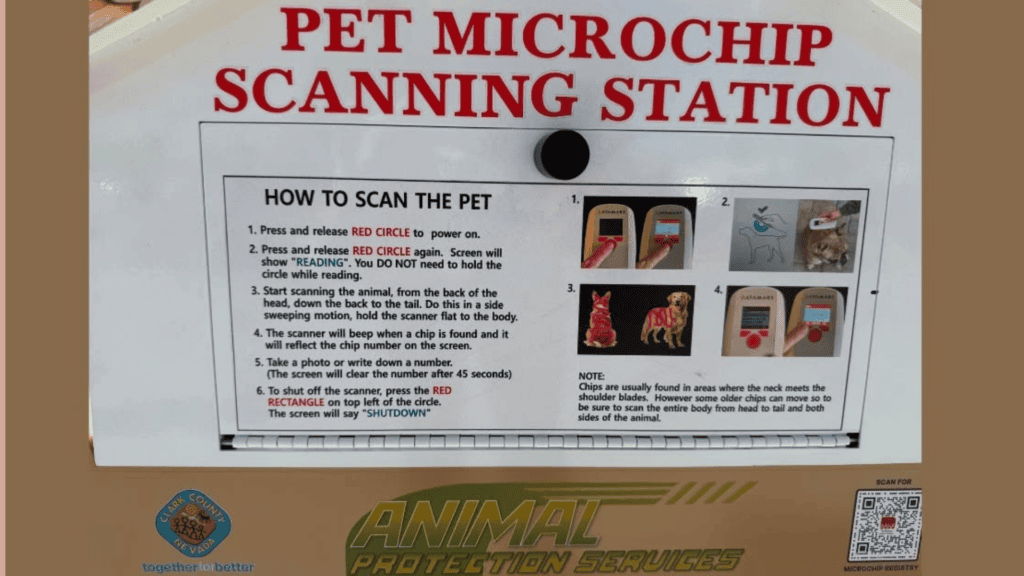
Each station contains a secured microchip scanner and instructions for use. After scanning a found dog or cat, the person helping the animal can use the scanner’s results to determine whether a microchip is present.
If a chip is detected, the next step is to look up its number through the American Animal Hospital Association’s (AAHA) microchip lookup tool. The lookup identifies the registry associated with the number, which may include services such as Pawbase, AKC Reunite or HomeAgain. The finder can then submit the chip number and found-pet information to the appropriate registry.
The registry contacts the pet’s owner directly. The scanner does not reveal the owner’s personal contact information, helping protect privacy while creating a path for reunification.
A microchip is not a GPS tracker. It is a small electronic identification device that contains a unique number, which a scanner can read. The chip itself does not store an owner’s contact details or track an animal’s location; the number must be associated with a registry containing current contact information.
That makes keeping registration details up to date an important part of responsible pet ownership. A chip can help identify a pet, but outdated registry information can make it harder to reach the family.
What If a Found Pet Has No Microchip?
Not every lost pet has been microchipped, and a detected chip may not have current registration information. If a scanner does not detect a chip, Clark County recommends checking for identification tags, creating a digital found-pet poster, sharing photos and information through neighborhood apps, and contacting local rescues or lost-and-found groups.
Residents can also take a found pet to a veterinary clinic to check for a microchip.
The county stresses that scanning stations are not places to leave animals. A found pet must not be abandoned or left unattended at a station.
People who cannot keep a found animal while trying to locate its family can reach out to neighbors, rescues or lost-and-found groups. A found-animal appointment can also be scheduled with The Animal Foundation by calling 702-760-PETS. If efforts to locate the owner have been exhausted, residents can contact Clark County Animal Protection Services at 702-455-7710.
Microchipping Is Required for Dogs and Cats in Clark County
The scanning-station initiative also connects to Clark County’s broader microchipping requirements. Under Clark County Code Title 10, dogs and cats older than four months must have microchip identification, with the requirement taking effect August 4th, 2025.
Clark County Animal Protection Services has committed $150,000 to strengthen pet-reunification efforts. To help residents meet the requirement, the county purchased 10,000 microchips and partnered with Hearts Alive Village, Heaven Can Wait and the Nevada SPCA (NSPCA) to offer microchips for $5 to residents of unincorporated Clark County.
Residents can contact the participating organizations to schedule an appointment:
- Hearts Alive Village: 2255 S. Nellis Blvd., Las Vegas; 702-297-7303
- Heaven Can Wait: 546 N. Eastern Ave., Suite 175, Las Vegas; 702-655-4800
- Nevada SPCA: 5375 S. Procyon St., Suite 108, Las Vegas; 702-873-7722
More information about microchipping, scanning-station locations and instructions for helping a found pet is available through the county’s Microchips webpage.
Dog Friendly Las Vegas previously covered Clark County’s microchip requirement in Clark County Joins Las Vegas in Requiring Microchips for Dogs. The new scanning stations add a practical resource for residents who encounter a lost animal and want to help it get home.
For pet owners, the initiative is also a reminder to verify that a pet’s microchip is registered and that the contact information associated with it is current. When a dog or cat goes missing, that small step can make a meaningful difference in how quickly the animal is reunited with its family.
Never Miss a Dog Event in Las Vegas
Get the latest dog events and top stories delivered straight to your inbox.