
Rescue Tech Spotlight: RoundUp.org and the Future of Recurring Giving for Nonprofits
For many nonprofits, especially rescues and shelters, fundraising is one of the most time-consuming and resource-heavy parts of operations. Events, campaigns, and one-time donations often require significant effort while delivering inconsistent results. Donation platforms, particularly those focused on recurring giving, aim to create more predictable revenue streams while reducing the operational burden on already stretched teams. Understanding how these tools function helps organizations evaluate where they can build sustainability into their funding models.
Rescue Tech Spotlight
Why Recurring Giving Can Be Challenging
RoundUp.org was founded on both personal experience and a broader observation about how people give. Founder and CEO Jed Carlson, after navigating a family health situation, recognized the critical role nonprofits play in providing access to information, care, and support that might otherwise be difficult to find.
At the same time, a seemingly simple moment at a grocery store revealed a larger gap. Being asked to round up for a cause — without being able to choose the nonprofit, receive a tax benefit, or have any connection to the outcome — highlighted limitations in existing systems.
Layered with this was a larger trend: Americans donate over $350 billion annually, yet only about 3% of those contributions are recurring. That disconnect became central to the platform’s mission — not necessarily to increase total giving, but to make giving more consistent, accessible, and integrated into everyday life.
How Donors and Nonprofits Use It
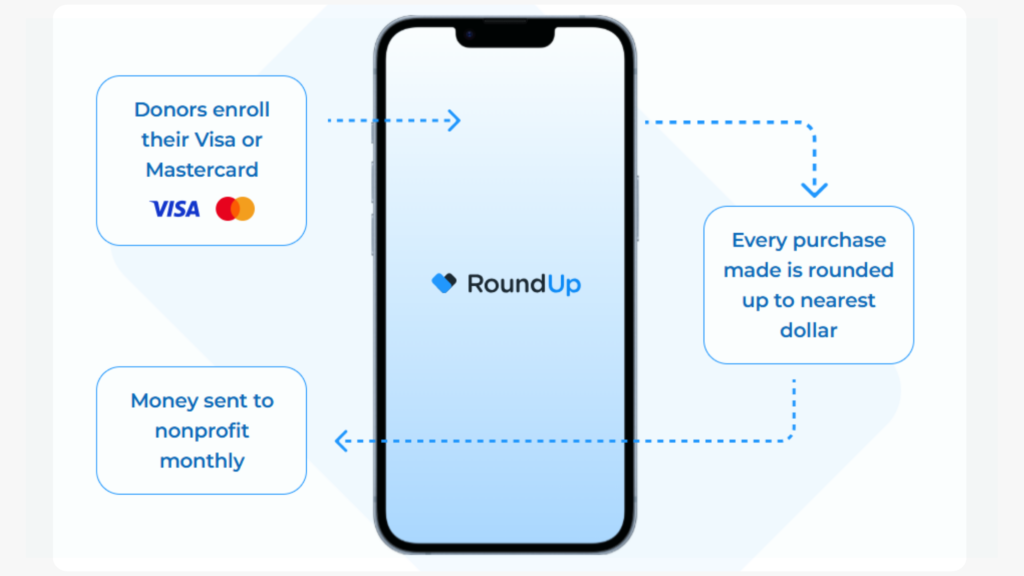
RoundUp.org allows individuals or businesses to link a Visa or Mastercard (including debit cards) and automatically round each purchase to the nearest dollar. Those micro-donations are aggregated and charged once per month, then distributed to the selected nonprofit through a donor-advised fund model.
The process is designed to be fast and accessible, with sign-up reportedly taking under 37 seconds. Donors receive end-of-year tax receipts, while nonprofits receive monthly reports including donor names, emails, and contribution amounts, allowing for direct follow-up and relationship building.
From a usage standpoint, the model applies broadly. As Carlson notes,
Every donor, no matter the nonprofit or their age or income bracket, is a consumer who spends money with their credit or debit card.
This universality allows the platform to function across sectors, from schools and community organizations to shelters and advocacy groups.
Unique Features and Platform Approach
One of the platform’s defining characteristics is its simplicity. Nonprofits do not need to sign up, manage integrations, or dedicate staff resources to participate. All verified 501(c) organizations are already included, with the option to customize their page and access tools like QR codes and shareable links.
The platform also intentionally limits donors to supporting one nonprofit at a time. Carlson explains this was initially due to technical uncertainty but has since become the most requested feature for change, with potential expansion likely in the future.
This approach reflects a broader focus on reducing friction while encouraging intentional giving, rather than distributing small amounts across multiple causes without engagement.
Funding Model and Financial Impact
RoundUp.org operates within the realities of payment processing, with fees applied for credit card and transaction handling. The platform reports that approximately 85% of donations reach the intended nonprofit, a threshold designed to help organizations maintain strong ratings with evaluators such as Charity Navigator.
The financial model for nonprofits is built around scale through participation. The average donor contributes just over $30 per month in rounded-up purchases. At that level, 100 participants could generate roughly $3,000 per month, or $30,000 annually, without the need for large-scale events or campaigns.
Early benchmarks show conversion rates ranging from 0.2% to over 20%, depending largely on how nonprofits promote the platform. Dedicated campaigns, signup incentives, and direct email outreach have proven significantly more effective than passive placement on websites or newsletters.
Ease of Use and Adoption
Ease of adoption is a central component of the platform’s design. There is no onboarding process required for nonprofits, and donor setup is intentionally streamlined. Supporting materials, including social media assets and QR codes, are provided to help organizations promote participation.
This structure reduces the administrative burden on nonprofits while allowing them to focus on engagement and communication with donors rather than technical setup or ongoing management.
Integration and Compatability
At present, RoundUp.org does not integrate directly with CRM systems or donor management platforms. Instead, nonprofits receive real-time email notifications when new donors sign up, along with monthly CSV reports containing donor information.
While this approach keeps the system simple and accessible, it may require manual integration into existing workflows for organizations using more complex fundraising systems.
Scale and Local Opportunities
RoundUp.org includes over 1.3 million nonprofits across the United States through ongoing data ingestion from government sources, ensuring that organizations are verified and in good standing. Adoption is occurring across a wide range of sectors and regions, without a single category emerging as dominant.
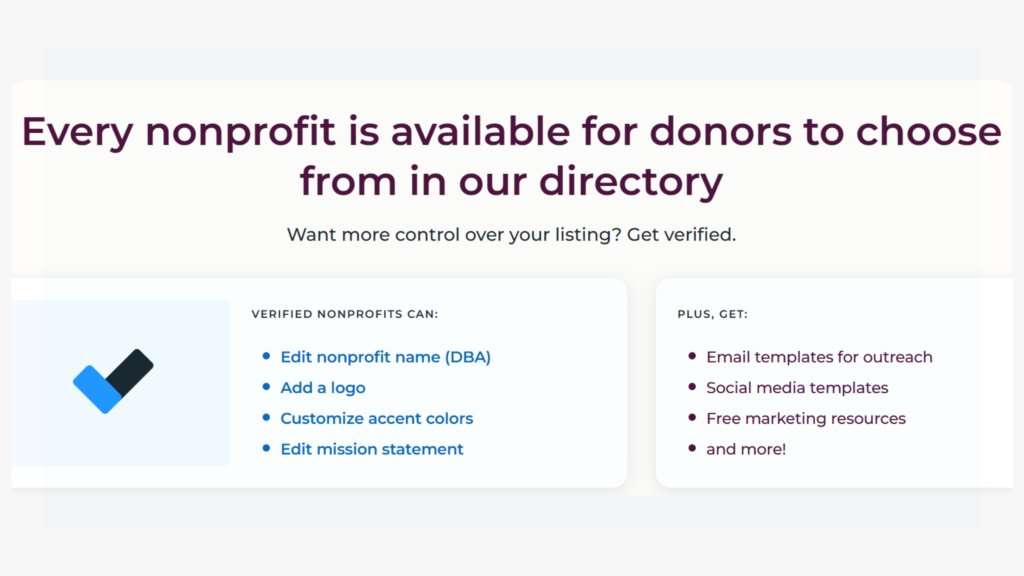
For local communities like Las Vegas, the opportunity lies in activation rather than availability. Because the platform is already inclusive of eligible nonprofits, success depends on awareness, promotion, and community participation.
Potential Challenges
As with many donation platforms, success is closely tied to adoption and behavior. Nonprofits must actively promote the platform to see meaningful results, and shifting donors toward a recurring giving mindset may require education and consistent messaging.
Additionally, while the monthly aggregation model helps reduce transaction fees and maximize funds reaching nonprofits, long-term donor retention and engagement patterns are still being observed as the platform continues to grow.
The lack of direct CRM integration may also present challenges for organizations with more advanced data management needs.
Future Features and Development
While specific roadmap details are not publicly shared, the platform is focused on increasing adoption among both donors and nonprofits. Expansion to additional card networks, such as American Express and Discover, is being considered, though no timeline has been confirmed.
There is also strong indication that donor flexibility features, such as supporting multiple nonprofits, may evolve in response to user demand.
RoundUp’s Perspective on Giving Behavior
RoundUp.org is built around the idea that small, consistent contributions can reshape how people engage with giving. Micro-donations lower the barrier to entry, allowing participation from individuals who may not otherwise contribute through traditional channels.
This approach also reflects generational shifts. As Carlson shared, feedback from younger users highlights a preference for automated, digital-first solutions that integrate seamlessly into daily life. One perspective captured it simply:
This is how we charity.
The long-term vision centers on normalization. Carlson describes a future where giving becomes part of routine behavior: a potential “RoundUp Day” where individuals choose the organizations they will support for the year, and conversations shift toward “Who do you RoundUp for?”
Why This Matters
Platforms like RoundUp.org highlight a shift toward embedded, behavior-driven giving rather than event-based fundraising. For nonprofits, especially those with limited resources, recurring micro-donations can provide a more stable financial foundation while reducing reliance on high-effort campaigns.
At the same time, outcomes will depend heavily on community engagement, awareness, and the ability of organizations to communicate the value of participation. As part of the broader donation technology landscape, tools like this offer an alternative model worth evaluating alongside more traditional fundraising approaches.
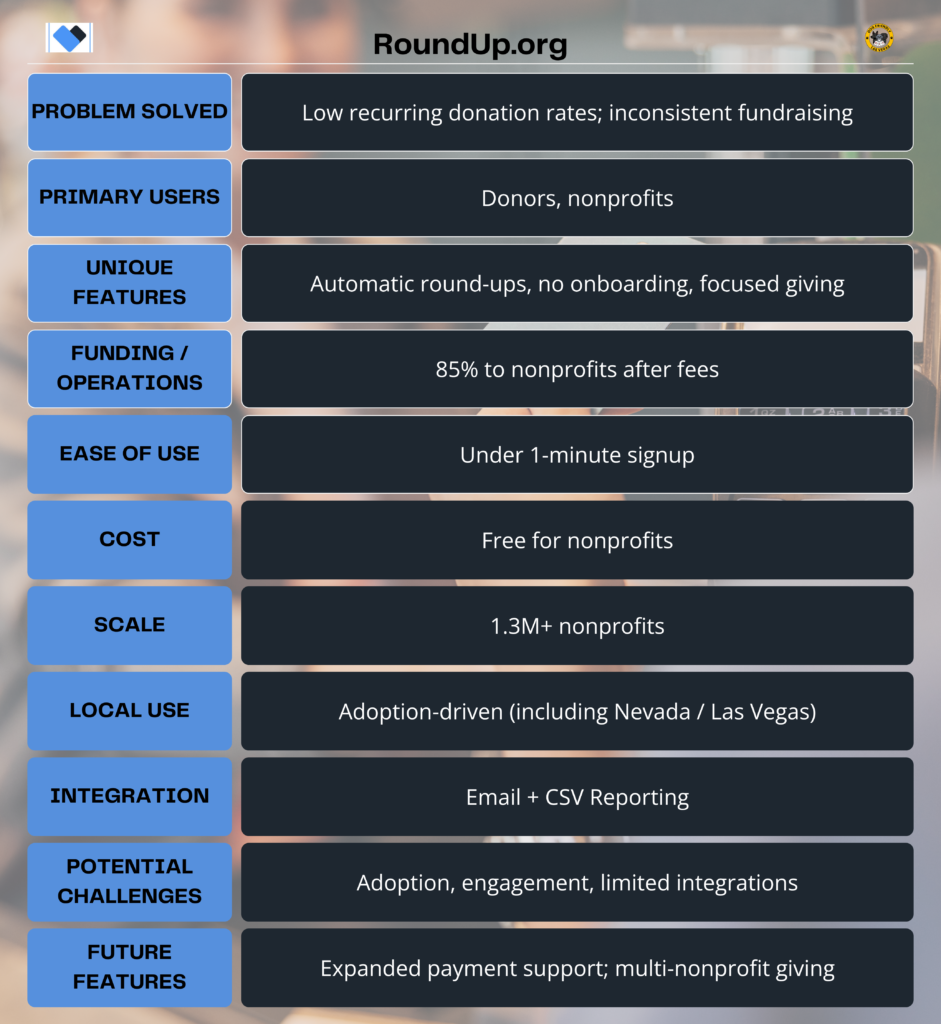
Quick View & Summary
Category: Donations / Recurring Giving
Content reflects individual opinions for general information only and is not a substitute for professional care; Dog Friendly Las Vegas is not responsible for actions taken based on this content.
Never Miss a Dog Event in Las Vegas
Get the latest dog events and top stories delivered straight to your inbox.