
26 Dogs Rescued in East Texas Highlights Growing Strain on Animal Welfare Systems Nationwide
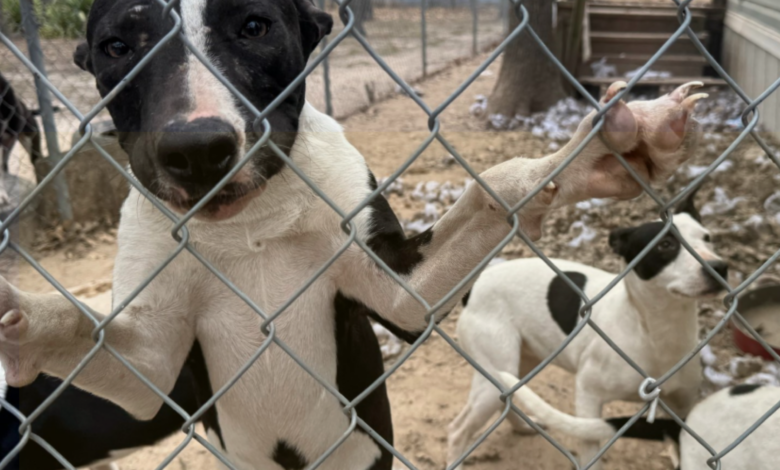
A rapid multi-agency response in East Texas this week brought 26 dogs to safety — but the circumstances surrounding the rescue underscore a broader, growing challenge facing animal welfare organizations across the country.
According to information shared by BISSELL Pet Foundation and local reporting from KETK, the dogs were removed from a property in Gun Barrel City, Texas, after neighbors raised concerns about the number of animals and their living conditions. What responders found was a situation that had escalated quickly and dangerously.
From Three Dogs to 26 in a Matter of Months
Authorities say the situation began with just three dogs. None were spayed or neutered. Over time, unchecked breeding turned those three into 26 — including a litter of 11 puppies born just days before intervention.
Gun Barrel City Animal Control responded to the scene and immediately requested outside support. Within hours, BISSELL Pet Foundation’s Animal Incident Management (AIM) team was activated to help coordinate emergency removal and placement.
A 24-Hour Rescue Effort
Through an existing emergency partnership, BISSELL Pet Foundation contacted SPCA of Texas, which mobilized quickly. Within 24 hours, all 26 dogs were safely transported from the property and relocated to SPCA of Texas facilities.
Once in care, the dogs were vaccinated, microchipped, medically evaluated, and placed on recovery plans — a critical step not only for their individual well-being, but for public health and shelter safety.
BISSELL Pet Foundation credited the outcome to strong collaboration, noting that this type of rapid response is exactly why large-scale incident teams exist.
Why These Situations Are Becoming More Common
SPCA of Texas acknowledged that cases like this are no longer rare.
Many smaller municipalities lack the staffing, funding, and infrastructure to manage sudden large-scale animal emergencies. When breeding goes unchecked — even unintentionally — situations can spiral beyond an owner’s ability to manage, leaving animals living in unsafe and unsanitary conditions.
Animal welfare agencies nationwide are reporting similar pressures, with shelters already strained by intake volume, staffing shortages, and rising medical costs.
The Role of Spay and Neuter Prevention
Officials involved in the Gun Barrel City rescue emphasized that spaying and neutering remains one of the most effective tools for preventing these scenarios.
The American Veterinary Medical Association (AVMA) notes that spayed and neutered dogs and cats tend to live longer, healthier lives and are less likely to develop certain cancers and diseases. Beyond individual health benefits, sterilization plays a critical role in reducing overpopulation and the number of animals entering shelters.
AVMA recommends that pet owners consult with their veterinarian to determine the most appropriate timing based on breed, size, and health factors.
Why This Matters to Southern Nevada
While this rescue took place in Texas, the underlying issues are familiar in Southern Nevada. Rural and semi-rural communities — including areas surrounding Las Vegas — often face similar challenges: limited access to affordable veterinary care, delayed sterilization, and overextended animal control resources.
Organizations like BISSELL Pet Foundation provide critical nationwide support by stepping in when local systems are overwhelmed, but long-term solutions rely heavily on prevention, education, and accessible spay/neuter programs at the community level.
A Reminder of What Partnership Can Do
The successful rescue of all 26 dogs demonstrates what’s possible when municipalities, national nonprofits, and established shelters work together quickly and effectively.
It also serves as a reminder that animal welfare crises often start quietly — and that responsible pet care, early intervention, and community awareness can prevent suffering long before emergency teams are needed.