An 11-Year-Old Blind Dog Spent Three Years in a Nevada Shelter — Last Week, Someone Finally Said Yes
Published March 17, 2026
Some dogs find their forever home in days. Tony waited three years.
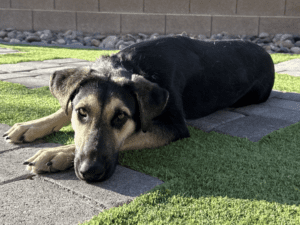
Tony is an 11-year-old large-breed mixed dog, and he is completely blind. He arrived at the Nevada Humane Society’s Carson City campus in December 2023, and for roughly the next three years, the shelter did everything it could to find him a family — adoption spotlights, social media campaigns, a Pet of the Week feature in October 2025.
Staff maintained his special diet, kept him comfortable, and because the noise and chaos of a busy shelter proved too stressful for a dog navigating the world without sight, they arranged for him to spend much of his time in a foster home. That arrangement was better for Tony’s wellbeing. It also made him harder to find.
Someone finally found him anyway. The Nevada Humane Society announced his adoption on Facebook in mid-March, sharing photos of the moment and a caption that read: “After three years in our care… Tony is finally going home.”
KTVN 2 News Nevada picked up the story the following day. Staff who had cared for him for over three years called it exactly what it was — not a routine adoption, but the end of a very long wait.
The Nevada Humane Society described Tony as playful, treat-loving, and gentle with people, a dog who experienced the world through his heart instead of his eyes.
He could be selective with other dogs and needed patient introductions, but there was nothing difficult about him once you understood what he needed.
What he needed, mostly, was someone willing to say yes to an old blind dog. That took longer than it should have.
Tony’s story lands at a complicated moment for Nevada’s shelters.
The Animal Foundation in Las Vegas, the largest single-site shelter in the country, took in 29,000 pets in 2025 alone, an 11% increase over the year before, and has described itself as constantly at or near capacity.
Nationally, the ASPCA estimates more than 390,000 dogs are euthanized in shelters each year due to overcrowding.
Shelter Animals Count data from the first half of 2025 shows adoptions of senior dogs declined 2% while adoptions of juveniles rose 6%. The math on older, special-needs animals is not moving in a good direction.
Which is exactly why a blind, 11-year-old dog finding a home after three years matters beyond the feel-good headline. It happened because a shelter refused to give up on him, and because somewhere in Northern Nevada, one person scrolled past the statistics and saw Tony instead.
The Nevada Humane Society is still full. Through today, March 17, it is running a free adoption event for large dogs (those over 50 pounds who have been in the shelter two weeks or more) as part of Hill’s Pet Nutrition’s Lucky in Love program.
“Big dogs take longer to get adopted for many reasons, including housing restrictions,” said NHS CEO Jerleen Bryant.
“Oftentimes it’s hard for people to rent or find housing with a larger breed dog, so we tend to see them staying longer in our shelters.”
Tony’s story is proof of something the numbers keep trying to argue against — the right person for every dog exists. Sometimes it just takes longer to find them.
Your feedback helps us cover this better next time.
Sorry to hear that — what was missing?
Glad it helped!
Get the latest dog events and top stories delivered straight to your inbox.