Rescue Tech Spotlight: LuxGive and the Future of Experiential Fundraising
For many nonprofits, fundraising events remain one of the most important, and often unpredictable, sources of revenue. Galas, silent auctions, live auctions, and fundraising dinners can generate significant support, but outcomes often depend on donated items, audience engagement, and an organization’s ability to create bidding momentum.
Rescue Tech Spotlight
Experiential fundraising platforms represent a growing category within the nonprofit ecosystem. Rather than relying solely on donated goods or services, these platforms provide curated travel and experience packages designed specifically for fundraising environments. Understanding how these systems work helps nonprofits evaluate whether experiential fundraising can complement more traditional event strategies.
Why Experiential Fundraising Can Be Challenging
Traditional fundraising events often face a common limitation: inventory. A donated gift basket, service package, or physical item can generally only be auctioned once. Once bidding closes, the fundraising opportunity ends.
At the same time, donor preferences continue to evolve. Many organizations have found that experiences often generate stronger engagement than material items because they create memories, stories, and emotional connections that extend well beyond the event itself.
This shift has contributed to the growth of auction travel and experience-based fundraising models designed to help organizations generate revenue in different ways.
According to Alondra Blick, Head of Marketing at LuxGive, one of the industry’s longstanding challenges is that traditional fundraising items often reach a ceiling once a single winning bidder is identified.
Donations capture the top winning bid; consignment captures the top 10.
That distinction sits at the center of LuxGive’s model. A donated item may generate revenue once. An experiential package, however, can often be sold to multiple interested bidders, creating additional fundraising opportunities without requiring organizations to continually source new inventory.
LuxGive was founded in 2019 by professionals from the luxury hospitality industry, including leadership experience with companies such as OneFineStay, the luxury villa division of Accor Hotels, and Luxury Retreats, now Airbnb Luxe. While working within the travel and hospitality sector, the founders recognized recurring challenges nonprofits faced when attempting to maximize event revenue while balancing limited staff resources, volunteer capacity, and increasing donor expectations.
Their goal was not only to help organizations generate more revenue through fundraising events, but also to elevate the travel consignment category itself by introducing private luxury residences, curated experiences, and a white-glove concierge model designed to enhance the donor experience from purchase through fulfillment.
How Nonprofits Use It
For many nonprofits, particularly rescues and volunteer-driven organizations, fundraising events are managed by small teams balancing donor outreach, sponsorships, logistics, and day-to-day operations. Adding travel fulfillment, guest communications, and post-event coordination can quickly become overwhelming.
LuxGive’s model is designed to reduce that burden by functioning as an extension of an organization’s fundraising efforts. Nonprofits work with a dedicated fundraising consultant who helps identify experiences that fit their audience, event format, fundraising goals, and donor demographics.
The platform can be utilized across live auctions, silent auctions, raffles, online fundraising events, paddle raises, and hybrid campaigns, allowing organizations to adapt experiences to different fundraising environments.
While the platform is most commonly used directly by nonprofits, LuxGive reports that for-profit businesses can also facilitate fundraising campaigns benefiting nonprofit organizations. In these situations, the business serves as the campaign organizer while directing proceeds to the designated nonprofit.
According to the company, this approach is frequently used by businesses seeking to support charitable partners, community initiatives, or nonprofit fundraising efforts while leveraging their own customer or stakeholder audiences.
Once a package is purchased, LuxGive assumes responsibility for fulfillment and guest support.
The nonprofit’s role is primarily focused on promoting and selling the experience during the fundraising campaign, while LuxGive manages reservations, trip coordination, guest communications, and redemption support after the event concludes.
This structure allows organizations to focus on donor engagement while outsourcing much of the travel management process.
Unique Features and Platform Approach
One of LuxGive’s most significant differentiators is its ability to support multiple sales of the same experience.
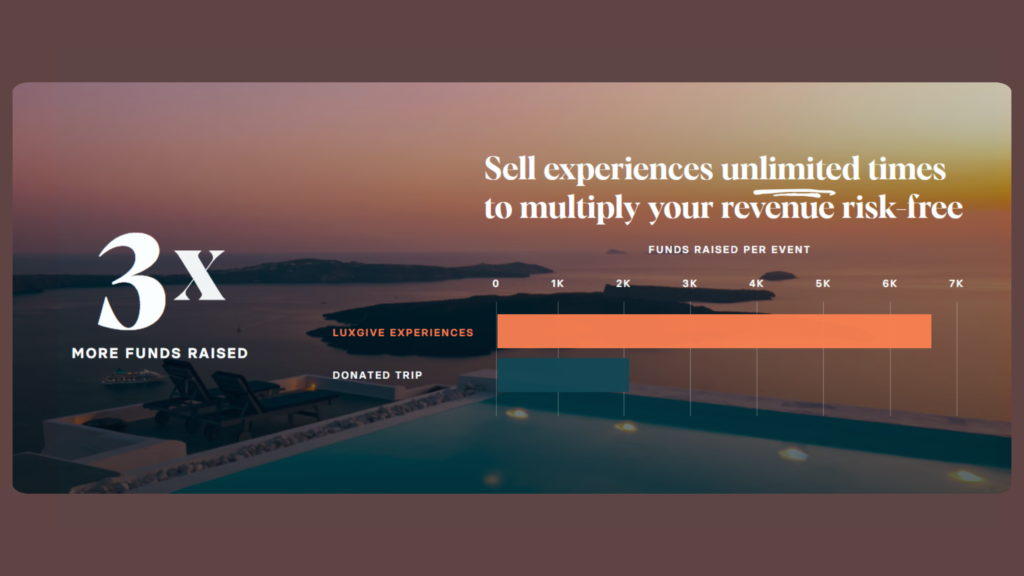
In a traditional auction environment, once the highest bidder wins an item, the fundraising opportunity is over. Experiential fundraising can change that dynamic. If multiple donors express interest in the same experience, organizations may be able to generate revenue from multiple purchases rather than a single winning bid.
This approach is one reason travel experiences have become increasingly popular among fundraising organizations seeking to maximize event revenue without continually sourcing new auction inventory.
A significant differentiator is the emphasis on private residences, luxury villas, and concierge-supported experiences rather than traditional hotel-based travel packages. The platform’s hospitality roots influence both the inventory selection process and the post-purchase experience, with dedicated guest services managing fulfillment and traveler support.
According to LuxGive, maintaining a high-quality donor experience is critical because nonprofits are effectively entrusting the platform with relationships they have spent years building.
Blick also noted an important behavioral factor that helps explain why experiential fundraising continues to perform well:
The vast majority of donors budget thousands of dollars for travel each year regardless. By placing travel at auction, we’re encouraging them to redirect that existing travel spend towards a meaningful cause.
Rather than creating entirely new spending, the model seeks to align planned travel expenditures with charitable giving opportunities.
Funding and Business Model
LuxGive operates through a consignment-style fundraising model.
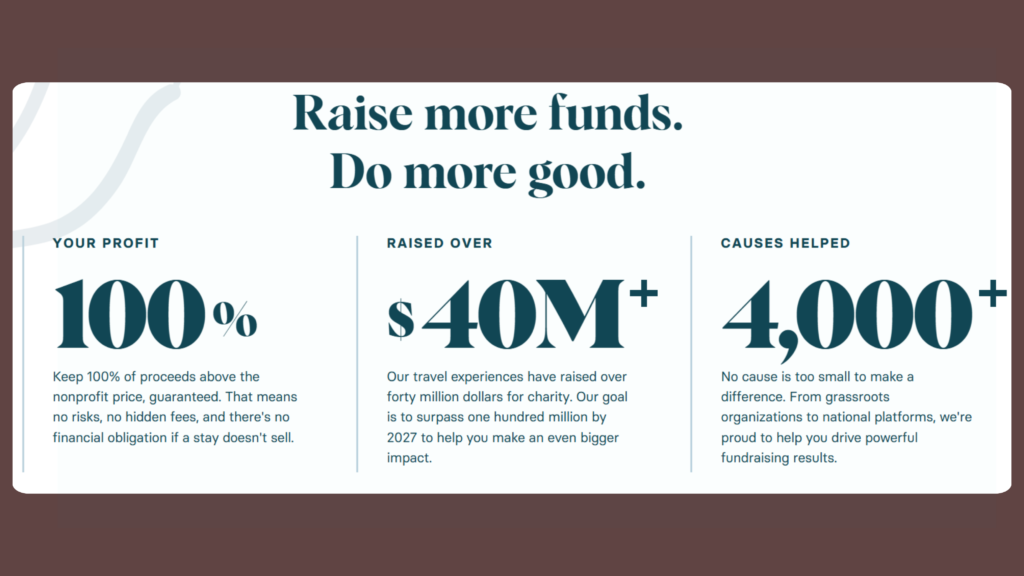
Unlike traditional donated auction items that generate a single fundraising opportunity, LuxGive’s consignment model allows organizations to offer the same experience multiple times if donor demand exists. Nonprofits incur no upfront cost to participate and are only responsible for the agreed nonprofit rate when an experience sells. Any amount raised above that rate remains with the organization.
This structure is designed to reduce financial risk while creating the potential for higher fundraising returns than a fixed-value donated item.
The distinction between donation and consignment can sometimes be confusing for organizations evaluating the model.
For example, if a donated vacation package receives a winning bid of $1,000, the nonprofit receives the full $1,000 and the fundraising opportunity concludes.
With a consignment experience, an organization may offer a package carrying a predetermined nonprofit rate of $1,000. If that experience ultimately sells for $2,500, the nonprofit retains the $1,500 fundraising margin while LuxGive receives the agreed-upon package rate. If additional donors wish to purchase the same experience, the fundraising opportunity may continue beyond the initial sale.
This ability to generate multiple fundraising transactions from a single experience is one of the category’s defining characteristics.
LuxGive’s catalog spans a broad range of fundraising audiences and event types. According to the company, experiences currently range from approximately $1,000 to more than $1 million, allowing organizations to align offerings with their donor demographics, fundraising objectives, and event scale.
Because experiences are provided through a consignment model, nonprofits are not purchasing inventory upfront or assuming the financial risk typically associated with retail travel packages. Organizations only incur costs when experiences are successfully sold.
This structure reduces barriers to participation for smaller nonprofits, shelters, rescues, and volunteer-led organizations while allowing them to incorporate premium travel experiences into fundraising campaigns.
Ease of Use and Cost
One of the recurring themes throughout LuxGive’s approach is simplicity.
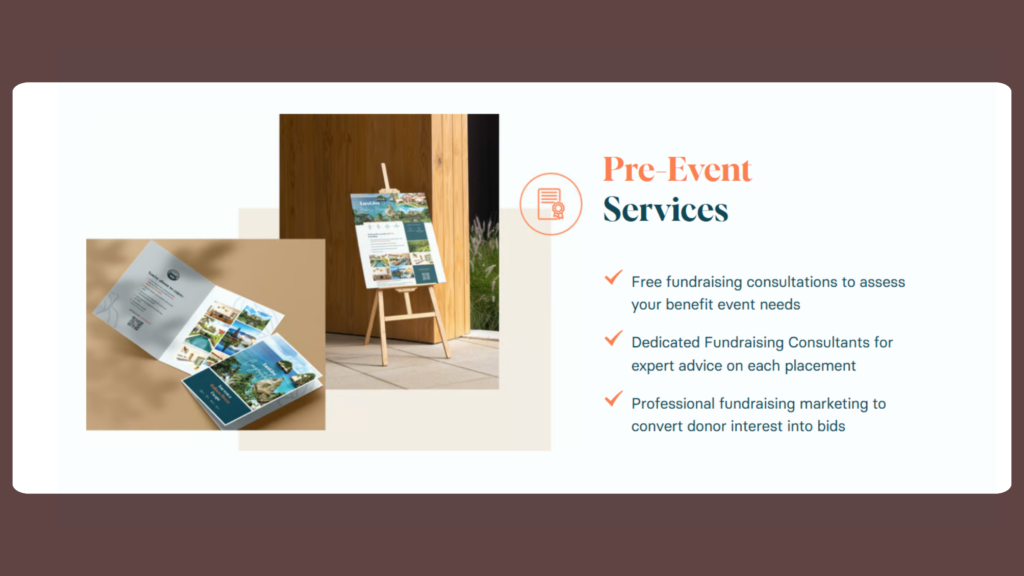
Organizations begin with a consultation designed to identify experiences that align with their audience, fundraising objectives, and event structure. There is no cost to speak with the LuxGive team, explore potential experiences, receive recommendations, or evaluate whether the model is a fit.
According to the company, organizations are paired with a fundraising consultant who provides guidance throughout the process, including experience selection, marketing assets, implementation recommendations, and fundraising best practices.
Importantly, nonprofits do not purchase experiences upfront and assume no financial risk if a package does not sell.
Organizations incur no upfront costs. Financial obligations only arise when an experience is successfully sold, with the fundraising proceeds distributed according to the agreed-upon package structure.
Once a donor purchases an experience, LuxGive assumes responsibility for guest support and fulfillment. This includes coordinating reservations, assisting with trip planning, and helping navigate unexpected disruptions, cancellations, or scheduling changes when they arise.
Blick emphasized that organizations are entrusting LuxGive not only with fundraising opportunities, but with donor relationships that nonprofits may have often spent years cultivating. As a result, guest experience and service remain central priorities throughout the redemption process.
The company describes this as a white-glove service model designed to ensure both nonprofits and donors have a dedicated point of contact throughout the travel experience.
Integration and Compatibility
LuxGive operates through its own fundraising portal, allowing organizations to review experience recommendations, select packages, execute agreements, access marketing materials, report winning bidders, and manage payments through a centralized system.
The platform is intentionally designed to function alongside existing fundraising ecosystems rather than requiring a specific CRM, auction platform, or event management system.
Organizations can incorporate LuxGive experiences into virtually any fundraising environment while continuing to use their preferred donor management and event software solutions.
The company also maintains partnerships with select fundraising platforms, including Givebutter, where organizations can discover and connect with LuxGive experiences directly through those systems.
This approach provides flexibility while minimizing implementation complexity for nonprofits with varying technical infrastructures.
Scale and Local Opportunities
Since launching in 2019, LuxGive reports working with more than 4,000 nonprofit organizations and facilitating approximately 35,000 donor trips while helping generate more than $40 million in fundraising revenue.
The company currently employs more than 70 team members supporting organizations across a broad range of nonprofit sectors.
In Nevada, LuxGive has supported hundreds of fundraising events and continues to work with organizations across a variety of nonprofit sectors. For shelters, rescues, and nonprofits throughout Las Vegas and Southern Nevada, the model offers an additional fundraising option that can complement sponsorships, annual galas, donor campaigns, and community fundraising events without requiring organizations to purchase inventory or manage trip fulfillment themselves
The flexibility of the model may also appeal to businesses looking to support local nonprofit organizations. LuxGive notes that fundraising campaigns can be structured in ways that allow businesses to raise funds on behalf of charitable organizations, creating opportunities for community partnerships, sponsorship activations, and cause-related fundraising initiatives.
For communities like Las Vegas, where businesses, tourism, hospitality, and nonprofit organizations frequently intersect, this structure may provide additional avenues for collaborative fundraising campaigns.
Organizations considering the model are typically encouraged to begin with a consultation to identify experiences that align with their donor base and fundraising goals. According to LuxGive, matching the right experience to the right audience is often one of the strongest predictors of success.
For dog-loving audiences, the platform also offers select dog-friendly travel experiences, including several domestic glamping and outdoor adventure packages that allow travelers to bring their canine companions.
Potential Challenges
As with any fundraising strategy, outcomes depend heavily on audience fit, event execution, and donor engagement.
One of the most common misconceptions Blick encounters is the assumption that donated items will always outperform consignment-based experiences. While donated items can certainly perform well, experiential fundraising operates under a different model focused on maximizing participation and repeat sales opportunities.
Organizations may also have concerns about luxury travel aligning with mission-driven fundraising. Understanding audience expectations and selecting appropriate experiences remains an important part of implementation.
Another consideration is market overlap. In communities where multiple organizations host fundraising events throughout the year, concerns about donor fatigue or experience saturation occasionally arise.
LuxGive notes that proposals are customized around each organization’s audience, event type, fundraising objectives, and donor demographics. Experiences can be tailored across varying destinations, price points, family-focused travel, couples experiences, raffles, silent auctions, live auctions, and multi-sale fundraising strategies.
If organizations have concerns about overlap, the company can recommend alternative packages or develop customized experiences designed specifically for a particular event.
Future Features and Development
LuxGive continues expanding both the breadth and accessibility of its experience catalog.
While luxury travel remains a core focus, LuxGive continues expanding its catalog through additional resort and hotel partnerships, more domestic travel opportunities, shorter-format getaways, and a growing collection of experience-driven offerings.

Current experiences already extend beyond travel and include opportunities tied to events such as the U.S. Open, Kentucky Derby, Formula 1 and NASCAR races, Paris Fashion Week, luxury rail journeys, and Broadway meet-and-greet experiences.
Future growth will continue to focus on expanding experience categories while maintaining the concierge-supported fulfillment model that differentiates the platform.
These developments reflect broader shifts in donor preferences toward experiences rather than material goods.
LuxGive’s Perspective on Fundraising Impact
LuxGive views experiential fundraising as an opportunity to create stronger emotional connections between donors and nonprofit missions.
According to Blick, experiences often resonate because they create lasting memories rather than temporary ownership of a product. While many auction items are eventually forgotten, meaningful travel experiences can remain connected to both the donor and the organization that made them possible.
This emotional component is one reason experiential fundraising continues gaining traction across the nonprofit sector.
The company also believes donor behavior plays a significant role in fundraising outcomes. Rather than asking supporters to spend money they had not planned to spend, experiential fundraising frequently redirects spending that donors may have already allocated toward travel and leisure activities.
From that perspective, successful fundraising occurs when donor experiences and nonprofit outcomes align, creating value for both parties.
Why This Matters
Nonprofits continue to face increasing pressure to diversify revenue streams while maximizing the effectiveness of fundraising events.
Experiential fundraising platforms represent one approach to addressing that challenge by combining donor engagement, hospitality, and fundraising strategy into a single model.
While experiential fundraising will not be the right fit for every organization or every audience, it represents a growing category that blends donor psychology, event fundraising, and hospitality in ways that differ from traditional auction models.
For shelters, rescues, and nonprofits operating in communities like Las Vegas and throughout Nevada, these tools may provide an additional fundraising avenue worth evaluating alongside more traditional approaches. Understanding how these systems function helps organizations make more informed decisions about where experiential fundraising may fit within their broader development strategy.
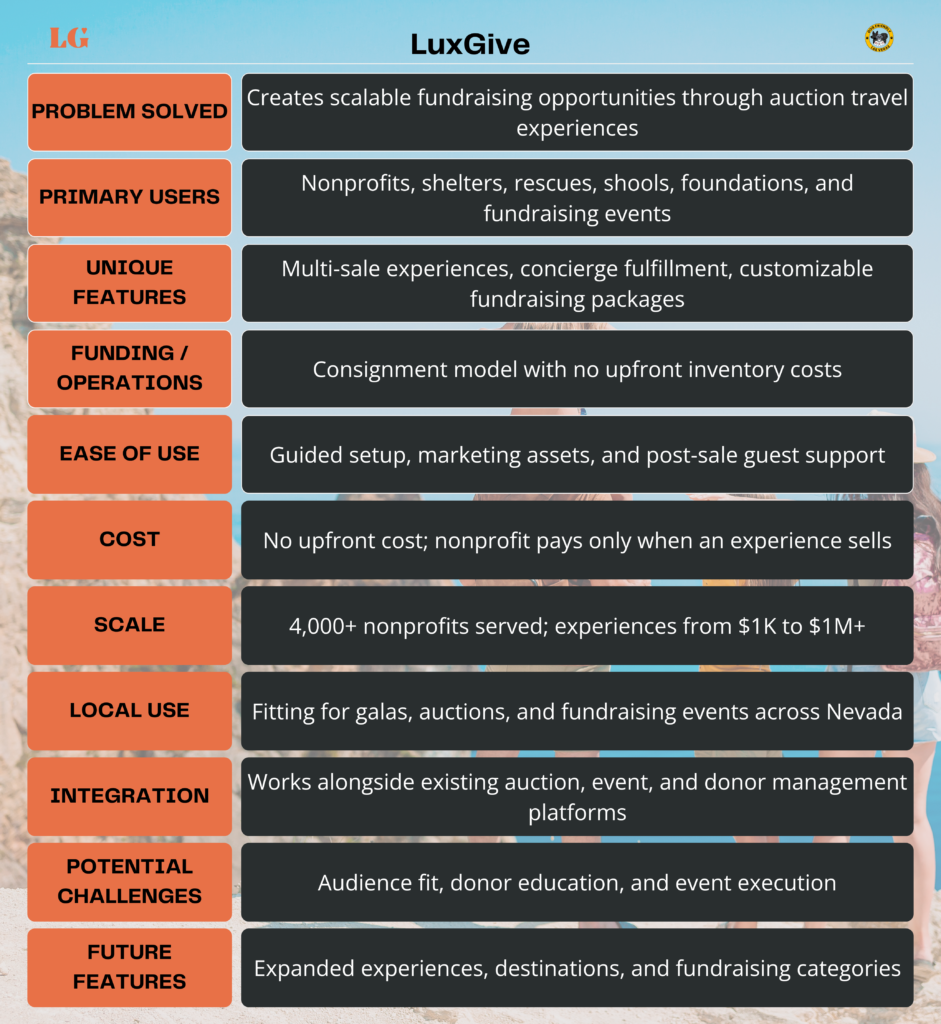
Quick View & Summary
Category: Fundraising / Experiential Giving
Content reflects individual opinions for general information only and is not a substitute for professional care; Dog Friendly Las Vegas is not responsible for actions taken based on this content.
Never Miss a Dog Event in Las Vegas
Get the latest dog events and top stories delivered straight to your inbox.