Chewy’s Expansion Into Veterinary Care and Pet Insurance – What It Could Mean for Nevada Pet Owners, Pricing, and Access
Updated July 15, 2026
For Nevada pet owners, Chewy has long been the familiar convenience layer of pet care, food delivered on schedule, prescriptions refilled without extra steps, and supplies showing up right when they’re needed most.
Now the company is moving deeper into veterinary medicine itself.
Chewy is expanding into veterinary clinics, telehealth services, pharmacy fulfillment, and pet insurance partnerships as part of what it describes as a more connected pet healthcare ecosystem. Its acquisition of Modern Animal, pending regulatory approval, would expand its clinic network from 18 to 47 locations.
For Las Vegas and Southern Nevada, where veterinary demand continues to rise alongside population growth, this shift raises a larger question: what happens when more of a pet’s care journey lives inside one interconnected system?
The Corporate Structure Behind Chewy and Why It Matters
Chewy’s current position is shaped by a longer corporate history that reflects broader consolidation trends in pet care.
The company began as an independent online retailer in 2011 and was later acquired by PetSmart in 2017. PetSmart itself is owned by private equity firm BC Partners, which acquired it in 2015. Chewy later became a publicly traded company again in 2019, separating from PetSmart while still carrying the legacy of that ownership structure and rapid scaling period.
This matters because it places Chewy within a larger pattern in the pet industry: services that were once local and fragmented are increasingly becoming part of larger, capital-backed ecosystems that connect retail, healthcare, and insurance.
Mars, Inc. and the Existing Veterinary Consolidation
Chewy is not entering a fragmented veterinary landscape, it is entering one where consolidation is already well established.

Mars, Inc. operates one of the largest veterinary care networks in the world through:
- Banfield Pet Hospital
- VCA Animal Hospitals
- BluePearl Specialty and Emergency Pet Hospitals
Together, these networks represent thousands of veterinary locations across the United States.
For Nevada pet owners, this means many veterinary visits, especially in corporate-affiliated hospitals, are already part of national systems that influence pricing structures, care pathways, and operational models, even when the clinic branding feels local.
Chewy is adding another layer to an industry that is already deeply structured by corporate ownership.
What Chewy Is Building Across Pet Healthcare
Chewy’s expansion points toward a connected system where multiple parts of pet care live under one umbrella:
- Pet food and supply ordering
- Prescription fulfillment through Chewy Pharmacy
- Telehealth veterinary services
- Insurance partnerships through CarePlus
- Physical veterinary clinics through Modern Animal expansion
If fully integrated, this creates a system where diagnosis, treatment, prescriptions, and payment are linked through one ecosystem rather than multiple independent providers.
For Las Vegas and Southern Nevada, that kind of integration could improve access and coordination in a region where veterinary demand often outpaces availability.
The Human Healthcare Comparison – Networks, Access, and System Design
The closest comparison for understanding this shift is human healthcare.
Over time, human medicine developed structured systems that include:
- In-network providers with lower out-of-pocket costs
- Out-of-network providers with higher or limited coverage
- Pharmacy benefit systems influencing medication access and pricing
- Insurance networks shaping which providers are easiest to use
Most patients still technically have choice, but system design strongly influences behavior through cost and convenience.
Veterinary care has historically operated with more flexibility, but as insurance, clinics, and pharmacy services become more connected, the structure begins to resemble similar network-driven models.
Not through explicit restriction, but through alignment of cost, access, and convenience.
The Potential Benefit – Access and Coordination
Veterinary care in Nevada is already under pressure from rising demand, staffing shortages, and increasing costs.
Pet owners commonly face:
- Limited appointment availability
- Emergency care delays
- Rising treatment expenses
- Complex insurance reimbursement processes
- Managing prescriptions across multiple providers
Integrated systems aim to reduce that friction.
When medical records, insurance claims, prescriptions, and appointments are connected, pet owners may spend less time navigating logistics and more time focusing on care decisions.
For many families, especially those managing chronic conditions or emergency situations, that coordination can be meaningful.
The Concern – Pricing Pressure and Harder Financial Decisions
The key concern emerging alongside consolidation is not just access, it is how pricing and care decisions may evolve when more services are bundled together.
As veterinary care, insurance, and pharmacy systems become more interconnected, pet owners may eventually encounter:
- Pricing differences based on network alignment
- Insurance incentives tied to specific providers or systems
- Prescription costs influenced by preferred pharmacy channels
- Treatment pathways shaped by coverage structures
Even without formal restrictions, systems can guide behavior through cost structure and convenience design.
In a field where decisions are often urgent and emotionally driven, those structural pressures matter.
And in an already difficult economic period, those pressures can directly affect whether families are able to proceed with care at all.
Nevada Reality – Rising Cost Strain and Pet Surrenders
In Southern Nevada, veterinary affordability is already a major factor in pet ownership outcomes.
Financial strain is widely recognized as one of the leading contributors to pet relinquishment. Shelters and rescues across the Las Vegas Valley have reported sustained high intake levels, reflecting how closely economic conditions and veterinary access are connected.
This is where veterinary system design becomes more than an industry issue, it becomes a community stability issue.
When care becomes harder to afford, the impact does not stay within clinics. It extends to shelters, rescues, and families making difficult decisions under financial pressure.
Independent Veterinary Care and Local Intervention Models
Alongside corporate expansion, independent veterinary clinics and local initiatives continue to play a critical role in Nevada.
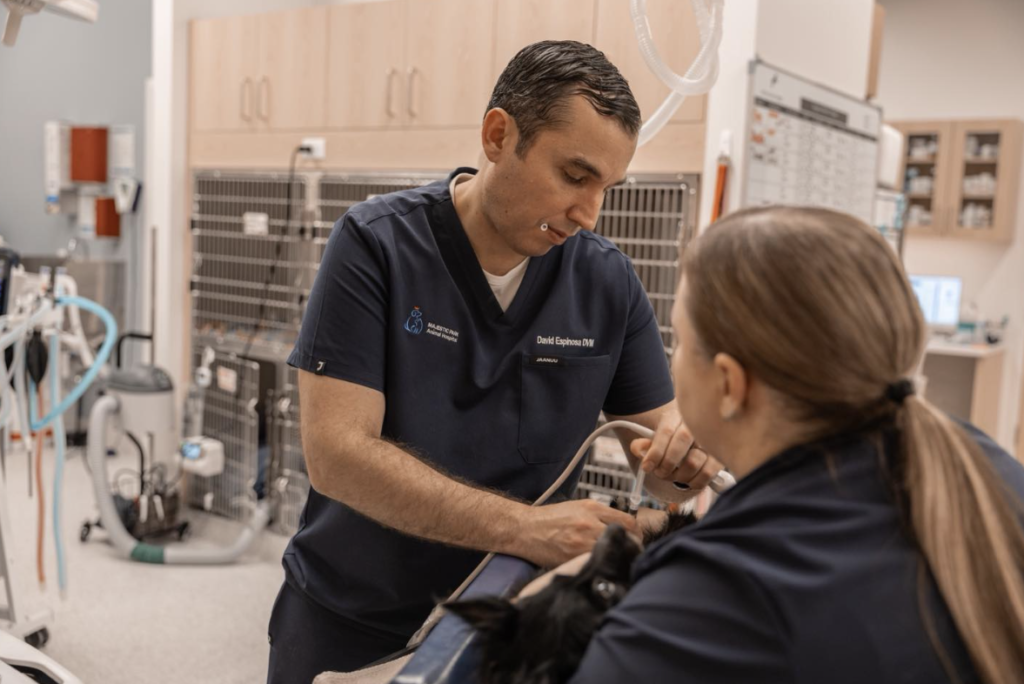
In our recent coverage, Las Vegas Vet Launches Nonprofit to Cover Critical Care for Dogs When Owners Can’t Afford It, we highlighted a local example of how independent veterinary leadership is stepping in to address affordability gaps directly.
In that case, a Las Vegas veterinarian launched Majestic Park Animal Care, a nonprofit that has already contributed $100,000 toward surgeries, chemotherapy, and critical treatment for pets whose owners could not afford care.
This model reflects a very different approach from large integrated systems. Instead of scaling access through networks, it addresses individual financial barriers through direct intervention tied to community-based veterinary care.
It also underscores a broader reality in Nevada: affordability gaps are being filled not only by policy or insurance, but by local veterinary-led initiatives and nonprofit support structures.
Additional resources such as Nevada SPCA’s Community Support Program and Heaven Can Wait’s Romeo Fund also continue to serve as critical safety nets for pet owners facing financial hardship.
What This Means for Nevada and Las Vegas Pet Owners
At this time, Chewy does not operate veterinary clinics in Nevada. However, Nevada pet owners are already engaged with its ecosystem through retail services, pharmacy fulfillment, and insurance partnerships.
At the same time:
- Mars operates large-scale veterinary networks nationally
- Independent clinics remain central to everyday care in Las Vegas and surrounding areas
- Nonprofit and community programs are increasingly filling affordability gaps
The result is not a single system replacing another. It is a layered environment where multiple models coexist and shape different parts of the care experience.
The Bigger Picture for Pet Care in Nevada
The long-term shift in veterinary medicine is not just about corporate expansion. It is about structure.
Care is becoming more integrated, more networked, and more dependent on system design across insurance, clinics, and pharmacy services.
For Nevada pet owners, that brings both opportunity and tension:
- More access points and coordination on one side
- Greater reliance on system alignment and coverage structures on the other
The impact will not be immediate or uniform. It will appear gradually in how care is scheduled, paid for, and accessed.
And in a state where veterinary demand is rising and affordability is already under pressure, those shifts will matter at both the household and community level.
Your feedback helps us cover this better next time.
Sorry to hear that — what was missing?
Glad it helped!
Get the latest dog events and top stories delivered straight to your inbox.