
How Much Dog Hair Do We Accidentally Eat? What Science Actually Says
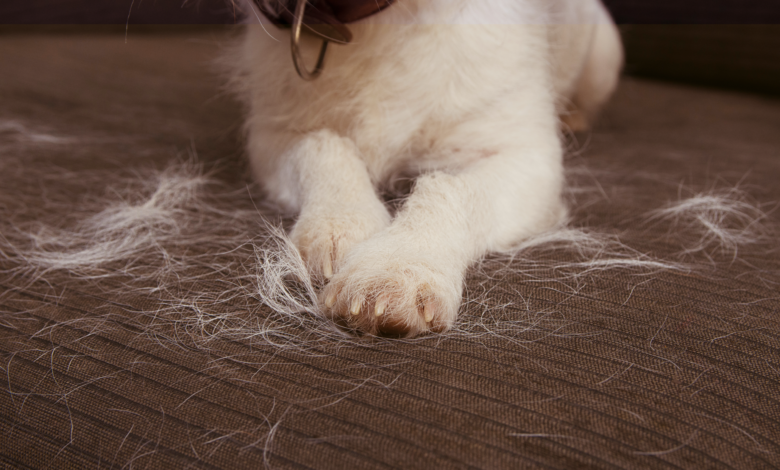
If you share your life with a dog, chances are you’ve found fur in places no fur should ever be. Coffee cups. Sandwiches. Lip balm. The inside of your mouth five seconds after you swore you just cleaned the house.
It’s a running joke among dog owners: we must eat pounds of dog hair every year. But is that actually true? And does it differ between homes with heavy shedders versus so-called “non-shedding” dogs?
The short answer: scientists haven’t calculated a lifetime “dog hair ingestion” number — but research on household dust, hair fibers, and indoor exposure gives us a surprisingly clear picture of what’s really happening.
There Is No Official “Dog Hair Ingested” Statistic – and That Matters
Despite how often the claim circulates online, there are currently no peer-reviewed studies that measure how much dog hair humans ingest over a lifetime. Veterinarians, toxicologists, and public health researchers consistently note that exact quantities would be nearly impossible to track ethically or accurately.
What does exist are studies measuring:
• Household dust ingestion
• Hair and textile fibers in indoor environments
• Human exposure differences based on cleaning habits
• Pet-related particulate matter in homes
These studies allow researchers to estimate relative exposure, even if they don’t provide a dramatic headline number.
What We Do Know: Humans Ingest Household Dust Every Day
According to research published by the U.S. Environmental Protection Agency and multiple environmental health journals, adults ingest an average of 30–50 milligrams of household dust per day, while children ingest significantly more due to hand-to-mouth behavior.
Household dust isn’t just dirt. It’s a mixture of:
• Human skin cells
• Fabric fibers
• Outdoor debris
• Food particles
• And yes — pet hair and dander
In pet-owning homes, dog hair and microscopic fragments of it become part of that dust load.
Shedding Dogs vs. “Non-Shedding” Dogs: The Exposure Difference
Dogs labeled as “non-shedding” don’t actually stop producing hair. Instead, they:
• Shed less visibly
• Retain loose hair in their coats
• Release more fine hair during grooming and handling
Studies on indoor allergens consistently show that homes with dogs — regardless of breed — have higher concentrations of animal-derived particles than homes without dogs.
However, homes with heavy-shedding breeds (like Labs, Huskies, German Shepherds, and Cattle Dogs) show:
• Higher airborne hair fibers
• More hair embedded in upholstery and carpets
• Greater redistribution of hair through foot traffic and air movement
In other words, shedding dogs increase the volume of hair in the environment, while low-shedding dogs still contribute to exposure — just less dramatically.
Cleaning Habits Make a Bigger Difference Than Breed
One of the clearest findings across multiple indoor exposure studies is that cleaning frequency matters more than dog type when it comes to hair and particulate ingestion.
Research comparing regularly cleaned homes to infrequently cleaned ones found:
• Up to 60% higher particulate accumulation in low-cleaning households
• Significantly higher fiber ingestion estimates
• More hair transferred to food preparation surfaces
Regular vacuuming with HEPA filters, wiping surfaces, and washing pet bedding dramatically reduces airborne and surface-level fibers — even in multi-dog homes.
So… Are We Actually Eating Dog Hair?
Yes — but not in the dramatic way social media suggests.
Most accidental ingestion happens through:
• Microscopic fibers in dust
• Hair fragments transferred from hands to food
• Airborne particles settling on dishes or utensils
Large, visible hairs are usually noticed and removed. The ingestion that does occur is trace-level, and for healthy adults, dog hair itself is considered biologically inert.
Medical literature notes that dog hair does not digest, does not accumulate, and passes through the body without harm in the vast majority of cases.
When Dog Hair Can Be a Problem
While accidental ingestion is generally harmless, higher exposure can matter for people who:
• Have severe pet allergies
• Are immunocompromised
• Have respiratory sensitivities
• Live in poorly ventilated spaces
For these households, grooming frequency, air filtration, and cleaning routines are far more impactful than switching breeds.
The Takeaway for Dog Owners
There’s no verified statistic proving we eat pounds of dog hair over our lifetimes — but science does confirm that pet hair becomes part of household dust, and cleaning habits strongly influence exposure levels.
If you live with a dog, especially a heavy shedder, you’re almost certainly ingesting some hair. But with regular cleaning, proper ventilation, and routine grooming, it remains a harmless — and frankly unavoidable — side effect of sharing life with a four-legged family member.
And if you’ve ever pulled a stray hair from your mouth and thought, this is my life now, you’re not alone. Science just happens to agree — with a lot more nuance than the internet usually allows.