The Only Dog for 1,700 Miles: Shiloh’s Remarkable Life on a Remote Island
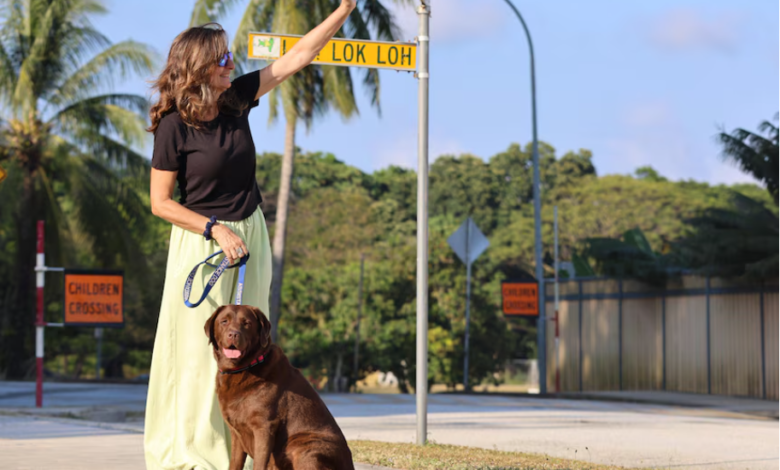
On one of the most remote inhabited islands in the world — a lush, volcanic peak rising from the Indian Ocean — there is exactly one dog. Her name is Shiloh, a gentle five-year-old chocolate Labrador who has become the unofficial heartbeat of Christmas Island. School buses slow when she passes. Children call her name from car windows. Seniors wait each week for her visits. And visitors who don’t know her story often stop mid-stride, stunned to see a dog where none are supposed to exist.
First Reported by ABC we found that Shiloh is the last dog allowed to live on Christmas Island, and she has become part of a remarkable, island-wide community effort to preserve both biodiversity and the emotional wellbeing of the people who live there.
A Remote Island With Strict Rules – and an Exception for One Dog
Christmas Island sits more than 1,500 kilometers north of mainland Western Australia and is home to species found nowhere else on Earth. Its dense rainforests, towering cliffs, and world-famous red crab migrations make the island a conservation priority.
Protect Your Pet with Odie Pet Insurance
Odie offers customizable pet insurance and wellness plans that help cover vet bills for accidents, illnesses, and routine care.
But the same fragile ecosystem has also led to strict domestic-animal laws. Decades ago, following serious declines in native bird and reptile populations, the Australian government eradicated wild dogs from the island and prohibited new domestic dogs from being brought in. Scientific assessments from Parks Australia and the Department of Agriculture show that dogs, along with feral cats, were contributing heavily to population losses of several endangered species, including the Abbott’s booby and the Christmas Island goshawk.
Despite this, Shiloh legally arrived years ago as an assistance dog for her previous owner, approved through special exemption.
When that owner moved back to the mainland, the cost of relocation and the lengthy mandatory quarantine — up to three months in Melbourne — left Shiloh stranded. She stayed on the island, and the community embraced her as one of their own.
A Community Dog in Every Sense
Today Shiloh lives under the care of support coordinator Tanya Sehonwald, who describes herself as the dog’s guardian but insists the entire island feels like her family.
Children shout her name as she walks past. Residents unfamiliar with her story often stop their cars, surprised, and ask how a dog made it onto the island at all. Those who have left pets behind for work assignments say Shiloh fills an emotional void in ways few expected.
Discover Your Dog’s Breed, Family, and History
The Embark Breed ID Test screens for 400+ dog breeds with up to 99% accuracy, giving you a detailed breakdown of your dog’s ancestry.
For many, she has become a rotating joy. Couples like Dan Graham and Neesha Copley, who had dogs before relocating to Christmas Island, take turns walking her as part of an informal roster. Others volunteer to help feed, groom, or simply spend time with her. “It feels super lucky,” Copley told ABC Pilbara. “She gives you those big eyes and that unconditional love we’ve missed.”
Weekly visits to the island’s Senior Citizens’ Club are one of Shiloh’s most treasured routines. There, she brightens the day of elders including 88-year-old Uncle Tan — known locally as the island’s “dog man.” Once the caretaker of seven beloved dogs before the island’s dog restrictions tightened, he now spoils Shiloh with pats and treats, calling it a highlight of his week.
Respecting a Multicultural Island
Christmas Island’s population of roughly 1,700 people represents one of Australia’s most culturally diverse communities. Nearly a quarter of residents identify as Islamic, and many prefer to avoid contact with dogs for religious reasons.
Sehonwald says the community handles this respectfully. Those walking Shiloh avoid certain public spaces and are careful not to impose the dog’s presence where it may make others uncomfortable. The care for Shiloh coexists with care for neighbors — another sign of how unique and interconnected island life can be.
A Dog With a Complex Past
Dogs were once far more common on Christmas Island.
Historical records and community accounts describe working dogs brought by early phosphate miners in the late 1800s and early 1900s. Many lived freely, interbreeding and forming packs. Over time, concerns about predation on native species grew. Studies in the 1970s and 1980s documented attacks on ground-nesting birds, purple swamphens, and young crabs — species that define the island’s ecological identity.
By the early 2000s, dogs were no longer permitted to enter the island except under strict exemption. Shiloh is one of the few dogs in modern history to receive such approval, and the only one who remains today.
According to island officials (cited in multiple government wildlife management reports), Shiloh will likely be the last dog ever to live there.
Why Shiloh Stays
Exporting Shiloh would require a charter flight with rare animal cargo space, followed by Australia’s mandatory three-month quarantine in Melbourne — options that are expensive, difficult to arrange, and emotionally stressful for the dog.
Sehonwald and the broader community have agreed that Shiloh is home. She is safe, cared for, and deeply valued — not only as the island’s last dog but as a meaningful source of companionship for people who often live thousands of miles from their extended families.
A Singular Place, A Singular Dog
Christmas Island is a rare environment in nearly every way: isolated, biodiverse, multicultural, and shaped by centuries of migration and conservation effort. That one dog could become so central to the identity of such a place seems improbable — yet Shiloh has done exactly that.
She is a reminder of what dogs do best, no matter how remote the setting: bring people together, soften difficult days, and spark joy in simple, unexpected moments. On an island where dogs are no longer permitted, one chocolate Labrador has become part of the landscape, the culture, and the heart of the community.
Shiloh is, in every meaningful way, Christmas Island’s dog.