National Registry for Animal Abusers Launches, Offering Unprecedented Protection for Dogs and Other Animals
Dog Friendly Las Vegas recently connected with John Waudby, founder of the U.S. Paw Registry, to explore the launch of the first national database of its kind, designed to track convicted animal abusers across the United States. Our conversation offered insight into the registry’s scope, technology, and potential impact, and allowed Waudby to explain how shelters, rescues, pet businesses, and everyday animal owners can use this tool to protect animals.
For decades, convicted animal abusers could cross state lines and adopt, purchase, or care for animals without leaving a trace of their history. That reality inspired the registry, which centralizes court-verified convictions for animal cruelty, abuse, and neglect.
“A woman convicted of starving dogs in one state could drive two hours and adopt a puppy in the next state with zero accountability,” Waudby explained.
That moment — realizing the system was built to forget — made it undeniable that a centralized, national registry was the only real solution.
From Nevada Roots to National Ambitions
The U.S. Paw Registry grew out of John Waudby’s work with Nevada Animal Advocates, a Las Vegas-based nonprofit dedicated to holding animal abusers accountable. Founded in the spring of 2025, the organization initially focused on legislative advocacy, including supporting Assemblywoman Melissa Hardy in passing Reba’s Law (AB381), which strengthened penalties for animal cruelty in Nevada. The law was prompted by the tragic case of Reba, a bulldog whose suffering exposed gaps in enforcement and legal protections, and it became a turning point for both the community and Waudby personally.
Recognizing that legislation alone could not prevent abuse from repeating, Waudby and Nevada Animal Advocates created the state’s first independent animal abuse registry. The searchable database compiles verified court records of individuals convicted of or charged with animal cruelty, helping shelters, rescues, breeders, landlords, and pet owners make informed placement decisions. Individuals remain listed until cases are resolved, and records are updated or removed if charges are dropped or convictions overturned.
The registry’s focus on transparency and prevention was driven by a simple principle: if the public deserves information about certain types of offenders, animals deserve protection as well. “Our goal was to close a critical gap,” Waudby explained.
Shelters and rescues often operate under capacity pressures. Without access to verified histories, animals can unintentionally be placed back into dangerous situations.
Building on the success and model of the Nevada registry, Waudby expanded the effort nationally through the U.S. Paw Registry. Unlike many localized initiatives, this national platform is designed to be scalable across all 50 states, providing centralized access to verified convictions that can prevent abuse from slipping through jurisdictional cracks. The vision reflects the scope of the problem: cruelty is not confined to one city or state, and protection shouldn’t be either.
Who Qualifies for the Registry
The U.S. Paw Registry is strictly conviction-based. Only individuals convicted of animal cruelty, abuse, neglect, or related offenses appear. Allegations, rumors, ongoing investigations, or unverified claims are not included. All entries are confirmed using court records and legal documentation.
Misdemeanors and felonies are both recorded, with severity clearly labeled. Repeat offenders have multiple entries reflecting separate convictions, making patterns of behavior visible. “A first-time misdemeanor is treated differently than a third felony conviction,” Waudby said. “This history helps shelters and the public assess risk more accurately.”

Neglect cases — such as failing to provide food, water, shelter, or veterinary care — are included alongside intentional abuse. The registry encompasses all animal abuse cases, regardless of species, including dogs, cats, horses, livestock, or exotic animals.
Each record reflects the jurisdiction where the conviction occurred, preserving legal definitions while standardizing essential information: offender name, offense type, severity, jurisdiction, conviction date, case number, and animal type. If a conviction is overturned or expunged, individuals may request removal. Currently, there are no automatic time limits; records remain until overturned or removed through legal process.
Public Acess, Safety, and Responsible Use
The registry is publicly accessible to shelters, rescues, breeders, groomers, trainers, landlords, pet businesses, and individual animal owners. “All users have access to the same information,” Waudby explained. Transparency is central to the mission, with no tiered logins or special access.
To prevent harassment or vigilantism, the registry limits personal details: home addresses, phone numbers, Social Security numbers, employer information, and victim data are never displayed. Users can see the offender’s name, state, county, offense, conviction details, and severity, along with guidance on responsible use.
“The registry should be used as a screening tool — to check whether someone seeking to adopt, purchase, or care for an animal has a history of cruelty,” Waudby said. “It should never be used to harass or threaten anyone.”
Shelters, rescues, landlords, breeders, groomers, and trainers are encouraged to integrate registry checks into their screening processes. A rescue in Georgia, for instance, can now check an applicant from Alabama, providing cross-state visibility that previously did not exist.
Impact on Dogs and Animal Welfare
Dogs, the most commonly abused domestic animals in the U.S., stand to benefit immediately. Beyond placement safety, the registry may help reduce recidivism. Research shows animal abusers often reoffend, and cruelty is linked to domestic violence. By tracking offenders nationally, the registry functions as both a deterrent and an early warning system for shelters, rescues, and law enforcement.
Puppy mills, dog fighting rings, and other organized abuse operations may also be harder to conceal. “If someone convicted of running a puppy mill tries to set up operations in a new state, they’ll show up in the registry,” Waudby said. Sunlight is the best disinfectant, and the registry provides exactly that.For everyday dog owners, the database offers a direct tool to ensure safety. Whether selling puppies, rehoming a dog, or hiring a dog-sitter, users can confirm whether someone has a verified history of animal abuse. This initiative also reflects a growing trend in the U.S., such as Florida’s statewide animal abuse database, which signals a national push toward coordinated animal protection systems.
Technology, Verification, and Integration
The registry is cloud-based and built for security, speed, and scalability. Every record is verified against court documents before publication. Updates occur as new cases are confirmed, with a long-term goal of real-time feeds from courts. API access is planned, allowing shelters, rescues, adoption platforms, and other state registries to integrate directly. Data standards ensure compatibility across jurisdictions while preserving local legal context.
Cybersecurity includes encryption, role-based access, secure cloud storage, and regular audits. Users can report potential errors, which are investigated and corrected promptly.
Governance, Oversight, and Public Responsibility
Currently, oversight is internal, managed by Waudby and a small team. Accuracy is maintained through verification of court records. An advisory board of legal, animal welfare, and technology experts is planned as the registry grows.
The registry is independent, funded by the founder, public donations, and community support. Only IRS-registered 501(c)(3) nonprofit sponsors are accepted, ensuring impartiality and that the registry serves animals and the public, not corporate interests.
Waudby emphasizes that users have a responsibility to use the registry ethically. Entries are for informed decision-making, not harassment. Citizens can support the initiative by reporting animal abuse, donating, sharing the registry with local shelters and rescues, and advocating for mandatory state participation.
Measuring Impact and Looking Forward
Success will be measured by the number of animals protected, searches performed, and adoption decisions informed by the registry. Features on the roadmap include a mobile app, automated alerts for local offenders, analytics dashboards, multilingual support, and educational resources to prevent abuse before it occurs.
In five years, we hope the registry is the national standard — used by every shelter, rescue, and pet-related business in the country
Waudby said. “Ultimately, it’s about preventing harm before it happens and making our communities safer for animals.”
How Readers Can Support
The U.S. Paw Registry relies on public engagement and donations to maintain operations and expand coverage. Individuals can:
- Make a financial contribution via the registry’s website
- Share the registry with local shelters, rescues, and pet organizations
- Report verified cases of animal abuse for inclusion
- Advocate for state participation and legislation requiring registry reporting
By taking these actions, readers can help ensure more animals are placed in safe, responsible homes and reduce the likelihood of abuse going unnoticed.
Why This Matters
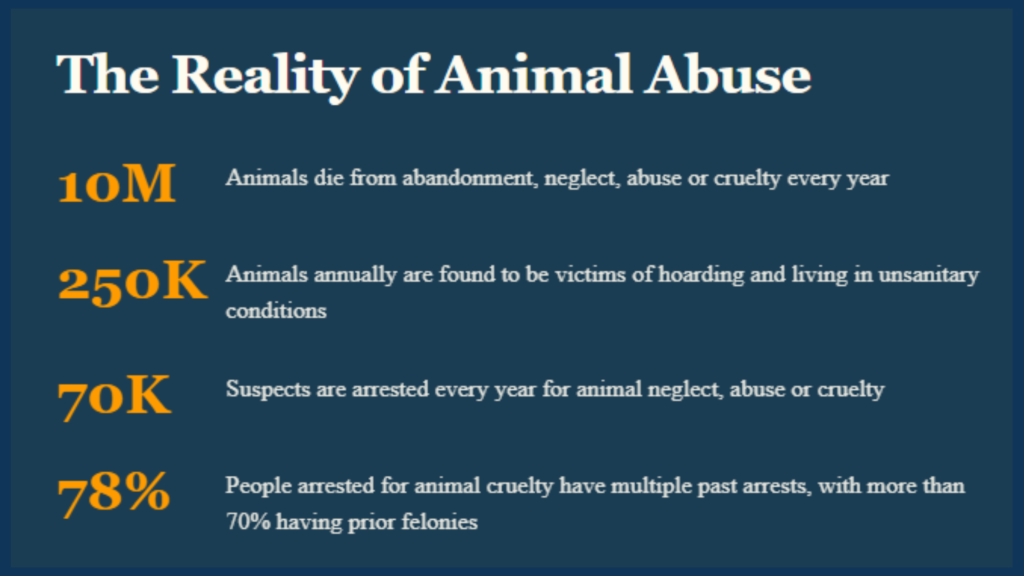
Animal abuse in the U.S. has historically been fragmented and invisible. The U.S. Paw Registry centralizes conviction data, empowers shelters, rescues, pet owners, and businesses, and establishes a new national benchmark for accountability. While still early in its implementation, it represents a historic step toward nationwide protection, giving dogs, cats, and other animals a significantly better chance at safe, loving homes.The registry is live and searchable at https://uspawregistry.org.
Content reflects individual opinions for general information only and is not a substitute for professional care; Dog Friendly Las Vegas is not responsible for actions taken based on this content.
Never Miss a Dog Event in Las Vegas
Get the latest dog events and top stories delivered straight to your inbox.