Rescue Tech Spotlight: Doobert Is Rethinking How Animal Rescues Manage Foster Care
For animal shelters and rescues, finding a foster home is only one part of the equation. Coordinators must recruit caregivers, answer questions, share animal information, track updates, arrange placements, and keep communication moving between staff, volunteers, and foster families. When a small team is already stretched thin, the work involved in managing those relationships can limit how many animals an organization is equipped to place in homes.
Rescue Tech Spotlight
Foster care can give animals a break from the shelter environment while creating room for others who need help. Yet expanding a foster program requires more than recruiting willing people. It also requires a reliable process for supporting them. Doobert approaches that challenge through a combination of animal welfare software and optional operational services, giving organizations different ways to manage the work behind foster care.
Why Foster Care Can Be Difficult to Scale
Doobert began with a different but related challenge: helping animals move from one place to another when they needed a better chance at finding a home. Founder Chris Roy became involved in animal transport after a flight carrying a dog from Wisconsin to Kentucky showed him how much coordination it could take to move an animal to safety. He went on to personally fly hundreds of shelter dogs before launching Doobert in May 2014.
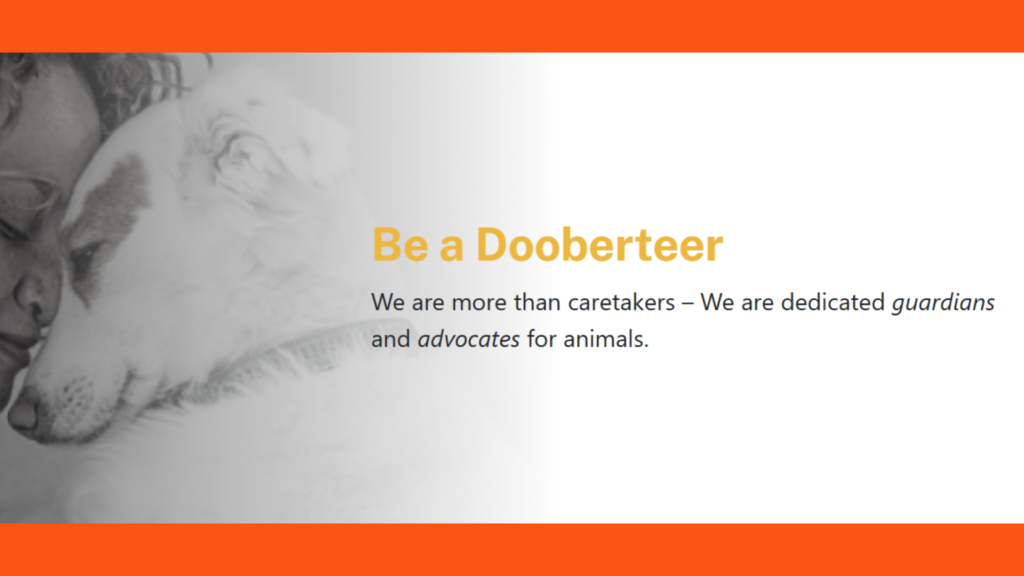
The organization initially focused on connecting people and coordinating animal transport. Over time, its work expanded into the technology and operational support shelters need to manage foster programs. The underlying challenge remained similar: willing people are often available, but connecting them with animals and coordinating the details takes time.
As Roy has explained,
Fostering isn’t a supply problem. There are 330 million people in this country. The fosters are out there. We just haven’t made it easy for them to say yes.
For shelters and rescues, that means foster care is not simply about finding someone willing to take an animal home. Caregivers need clear instructions, timely answers, updates, and support when questions arise. Without a dependable process, those responsibilities can fall on a small number of staff members or volunteers.
How Shelters and Rescues Use Doobert
Doobert offers a free case-management option that helps animal welfare organizations organize cases and coordinate work. The free tier includes unlimited cases, users, text messages, and emails, giving organizations a starting point without adding another software subscription to the budget.
Organizations can also use paid features to connect web forms with their case-management workflows. This can help information submitted online move into the organization’s working process rather than requiring staff to transfer every detail manually.
For organizations that need more help managing foster care, Doobert Connect adds support beyond the software itself. Its services include 24/7 phone and text support for foster caregivers, following the organization’s policies and procedures. Higher tiers add foster-management tools and Foster Space, while the most comprehensive option includes help with foster onboarding, caregiver engagement, and placement coordination.
The distinction matters because not every organization needs the same level of help. A shelter with an experienced foster coordinator may primarily need after-hours support. A smaller rescue with limited staff capacity may need help managing more of the process, from bringing caregivers into the program to coordinating placements.
What Sets the Platform Apart
Doobert combines technology with human support. Instead of requiring every organization to manage all foster communications internally, its paid services can help answer routine questions and provide support outside normal business hours.
The organization also works within each shelter or rescue’s established policies. This is important because foster requirements, animal-care instructions, approval processes, and placement decisions can vary. Outside support needs to follow the organization’s rules rather than introduce a separate set of procedures.
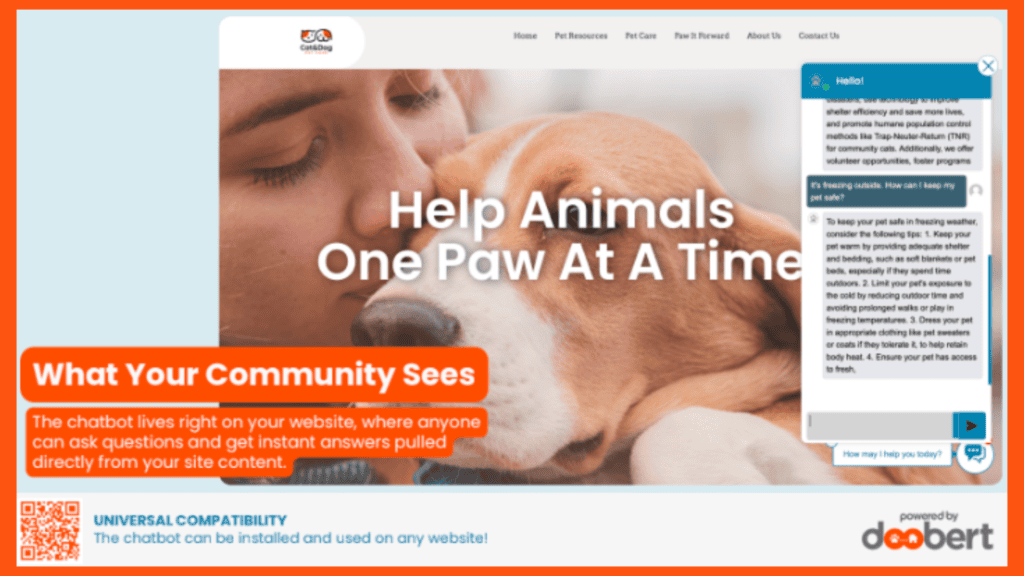
For teams that regularly juggle animal care, adoption work, fundraising, and volunteer coordination, the potential benefit is less administrative follow-up and more time for other responsibilities. The software helps organize information, while the optional services can help with the people and processes surrounding foster care.
Funding and Business Model
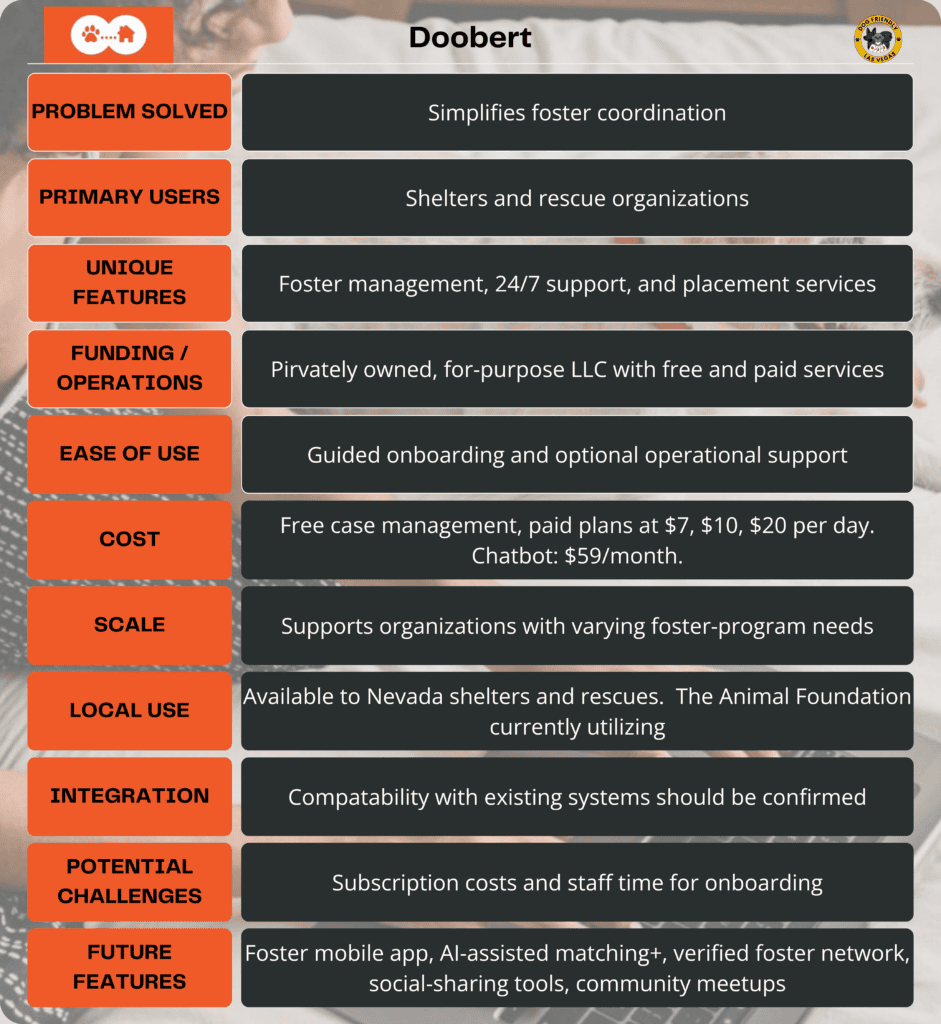
Doobert operates as a privately owned, for-purpose limited liability company. Its model combines free software with paid features and services, allowing animal welfare organizations to choose the tools and operational support that best fit their needs.
Organizations can begin with free case management and decide whether additional tools or operational assistance would be useful. Revenue comes from paid software features, foster-management services, outsourced program support, and a separate paid website chatbot.
This approach gives shelters and rescues flexibility to start with basic tools and invest in additional support as their programs and needs evolve.
Ease of Use and Cost
The free case-management option gives organizations a way to begin organizing cases without committing to a paid foster-support plan. For organizations considering Doobert Connect, the key question is which level of support would address their actual workload.
Doobert publishes three Connect service tiers:
- Basic — $7 per day: 24/7 foster phone and text support that follows the organization’s policies.
- Pro — $10 per day: Basic support plus the foster-management system and Foster Space.
- Complete — $20 per day: Basic and Pro features, plus Doobert-managed foster onboarding, caregiver engagement, and placement coordination for organizations with annual intake of up to 5,000 animals.
In practical terms, Basic helps staff support foster caregivers around the clock. Pro adds tools to organize and manage the foster program. Complete adds hands-on help bringing caregivers into the program, keeping them engaged, and coordinating placements.
Organizations with annual intake above 5,000 animals are directed to contact Doobert for enterprise pricing. Setup or onboarding fees may also apply, so organizations should confirm the full cost and included services before committing. Doobert’s website chatbot is a separate offering, with a published premium price of $59 per month; it is not one of the Connect tiers.
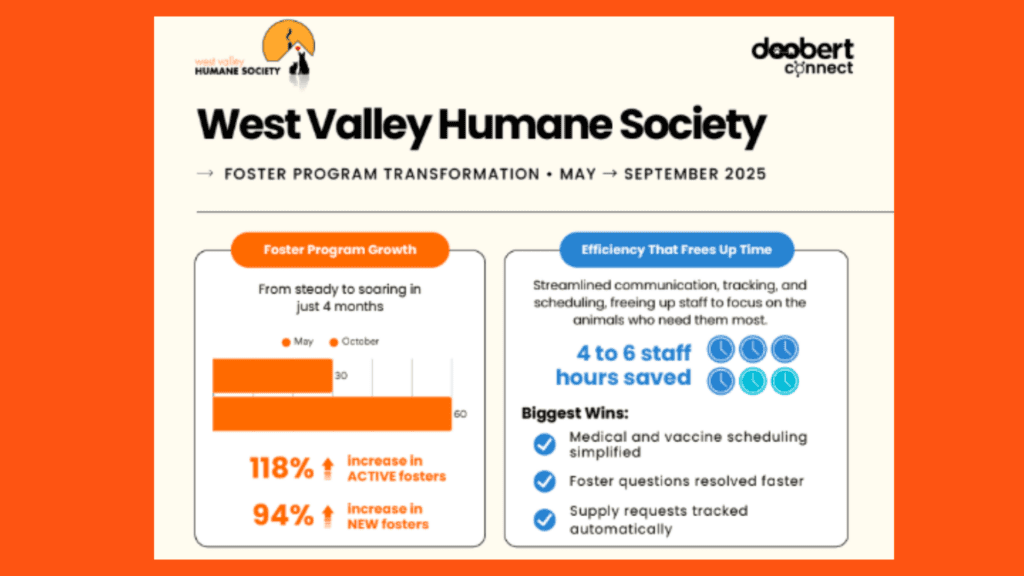
The daily prices offer a familiar way to consider the expense alongside the time and support the service may provide. West Valley Humane Society in Caldwell, Idaho, reported recovering four to six staff hours per week using Doobert Connect between May and September 2025. At an illustrative wage of $20 an hour, that represents roughly $320 to $480 in staff time over four weeks. The comparison helps put the daily service prices in context, but reclaimed staff time is not automatically a cash saving. The actual value depends on staff wages and how the additional capacity is used.
As Roy puts it,
Every hour we give back to a shelter goes into saving animals. Efficiency is the most underrated lifesaving tool in this industry.
For a small team, the benefit may be less about reducing payroll and more about freeing staff and volunteers to focus on animal care, foster recruitment, fundraising, and other priorities. Each organization will need to weigh its current workload, foster volume, budget, and need for outside support.
Scale and Local Opportunities
Doobert reports supporting more than 4,000 active foster caregivers across more than 20 states. Its reach gives shelters and rescues access to a model that can be used in different locations and organizational settings.
In Nevada, The Animal Foundation is among the organizations associated with Doobert. Its presence provides a local point of reference for organizations exploring how technology and operational support might fit into their own foster programs.
The best fit will depend on an organization’s circumstances. A rescue with a small, stable foster network may need little more than basic case-management tools. A shelter handling a larger volume of animals or trying to expand foster participation may benefit from additional coordination and caregiver support.
Integration and Compatibility
Integrations connect one software system with another so information can move between them. When those connections are available, staff may spend less time copying details from forms or one platform into another.
Doobert offers paid web-form connections for case-management workflows, while other case-management integrations are in development. Its premium website chatbot has separate integrations with Petco Love Lost and Adopt-a-Pet. These chatbot connections should not be confused with the integrations available through the case-management platform.

For organizations considering a more fully outsourced foster program, Doobert estimates that the transition takes about four to six weeks, with approximately 10 to 15 staff hours devoted to initial onboarding over a couple of weeks. That initial investment gives the organization and service provider time to establish procedures and make sure the support reflects the shelter’s policies.
Before choosing a plan, organizations should confirm which integrations are currently available for the specific service they intend to use and whether any setup work or fees are required.
Potential Challenges
As with any outside service, the fit depends on what an organization needs and how it currently operates. A team with an established foster process may not need comprehensive outsourced support. Another organization may find that managing calls, messages, onboarding, and placements has become difficult to sustain with its available staff.
Organizations should understand which responsibilities remain with their own team, how questions or urgent concerns are escalated, and how the service follows their policies. They should also account for onboarding time, any setup fees, and the ongoing cost before making a decision.
The free tier offers a way to begin organizing case-management work without paying for the full range of services. For organizations considering a paid plan, the useful comparison is not price alone but what each option provides and whether that support addresses a real operational need.
Future Development and a Foster-First Vision
In April 2026, Doobert closed its animal transport service after approximately 10 years and shifted its focus toward fostering. Founder Chris Roy envisions a foster-first, rather than shelter-first, approach to animal welfare, where animals stay in foster homes whenever medical or behavioral needs do not require a shelter environment. That vision places greater emphasis on making fostering accessible and giving organizations the tools to support more foster caregivers.
Doobert’s next phase centers on building the technology and support systems to make that possible at a larger scale. Roy discussed developing internal tools that could help Doobert serve even more organizations, using AI to help draft communications and recommend potential foster matches for staff to review, and working toward a first version of a foster mobile app by the end of 2026. Other ideas include a verified foster network, curated Doggy Day Out experiences, tools that make it easier to share foster animals on social media, and opportunities for local businesses to support foster programs through unique partnerships. Foster-community meetups are another way Doobert hopes to strengthen connections around fostering.
The common thread is making foster care easier to coordinate, participate in, and expand. Rather than treating fostering as one part of shelter operations, Doobert is investing in ways to make it a more central part of how animal welfare organizations serve animals and their communities.
Why This Matters
Foster care can help shelters and rescues make more room for animals that need assistance, but the work behind each placement takes time. Recruiting caregivers, answering questions, coordinating information, and maintaining relationships all require consistent attention.
Doobert offers organizations several ways to approach that workload, from free case management to paid tools and outsourced foster support. The right choice will depend on the organization’s budget, current processes, foster volume, and available staff.
The experience reported by West Valley Humane Society provides one example of the potential value of returning staff time to other work. Results will vary, but the broader question is relevant to organizations of every size: which parts of foster coordination need better tools, and which might benefit from additional support?
For rescue leaders, the goal is not to add technology for its own sake. It is to find practical ways to support foster caregivers, reduce avoidable administrative work, and help staff and volunteers focus their limited time where it can make the greatest difference for animals.
Content reflects individual opinions for general information only and is not a substitute for professional care; Dog Friendly Las Vegas is not responsible for actions taken based on this content.
Never Miss a Dog Event in Las Vegas
Get the latest dog events and top stories delivered straight to your inbox.