
Nevada Says Dogs Are Property. Fine. Then Apply Property Law.
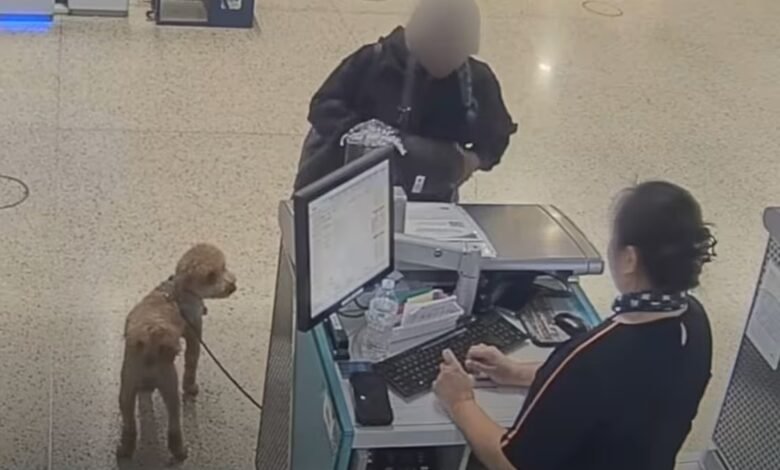
When a two-year-old goldendoodle was found tethered to a metal baggage sizer inside Terminal 3 at Harry Reid International Airport on February 2, most people assumed the legal outcome was straightforward. The moment his owner walked away, her rights were gone.
They were wrong — at least procedurally.
For ten days after the incident at the JetBlue Airways counter, the woman accused of abandoning him could still have reclaimed the dog under standard impound and reclaim rules. The animal was placed on a mandatory 10-day hold before he became eligible for transfer or adoption.
That detail surprised many in the community.
But it also exposed a deeper tension between Nevada’s property framework and its animal-control procedures.
What Abandonment Means In Property Law
Nevada courts, like courts nationwide, apply a familiar principle in property cases: abandonment requires both intent to relinquish ownership and an act demonstrating that intent. Once property is abandoned, ownership rights terminate.
The doctrine is not controversial.
If someone intentionally discards property and walks away, title can be extinguished. The law distinguishes between something that is lost and something that is deliberately relinquished. The former preserves ownership. The latter can end it.
Under Nevada law, companion animals are generally classified as personal property. They are not treated as a separate legal category. That classification matters because property law turns heavily on intent.
And in this case, according to police reports summarized by local outlets, intent is central to the allegations.
The Allegations As Reported
According to coverage by KTNV and other Las Vegas outlets, 26-year-old Germiran Bryson allegedly attempted to board a flight with the dog, claiming him as a service animal without completing required U.S. Department of Transportation paperwork.
When airline staff refused boarding, police reports state she tied the dog’s leash to a metal baggage sizer near the counter and proceeded toward security. Officers later alleged she told staff to call animal control because she did not want to miss her flight.
Body-camera summaries cited in news reports indicate she said the dog had a tracking device, suggesting she could locate him later.
She has been charged, not convicted, with misdemeanor counts of animal abandonment, animal abuse, resisting a public officer, and making false statements to obstruct a public officer. The case remains pending.
For purposes of legal analysis only, the reported facts describe two elements that property courts typically examine: an intentional act — securing the dog to airport property and walking away — and statements that could be interpreted as intent to relinquish immediate custody.
Whether that ultimately constitutes legal abandonment is a question for the courts.
The 10-Day Hold
The key procedural wrinkle lies not in property doctrine, but in animal-control practice.
Nevada Revised Statutes Chapter 574 authorizes the impoundment and protection of animals in certain circumstances, including neglect or abandonment. However, the statute itself does not set a specific 10-day holding period.
Instead, hold lengths are determined by local policy and municipal contracts. In typical lost-pet cases in Las Vegas, shelters operate under a 72-hour legal hold. In this case, authorities imposed a mandatory 10-day hold before the dog could be transferred.
Public reporting indicates the dog was held before ultimately being transferred to Retriever Rescue of Las Vegas. Coverage by national outlets has reported that he was housed at The Animal Foundation during that hold period.
During that window, under standard reclaim procedures, the owner could have come forward, demonstrated ownership, and sought to retrieve the animal.
Only after the hold expired was the dog eligible for adoption. He was later adopted by Officer Skeeter Black of the Las Vegas Metropolitan Police Department, one of the officers who responded the night he was found.
The system functioned as designed.
The debate is whether the design fits the facts.
Lost Is Not The Same As Left
Mandatory hold periods exist to protect pet owners whose animals are lost unintentionally. A dog that slips out of a yard or is separated during travel is not legally abandoned simply because it is found alone.
But property law traditionally distinguishes between accidental loss and deliberate relinquishment.
In this case, authorities treated the dog under the same hold framework applied to lost animals, even though police reports describe what they believe was intentional abandonment.
If pets are legally property, some argue, then abandonment doctrine should apply consistently. Others counter that animal-control law has evolved separately from traditional property principles for good reason — to protect both animals and owners from irreversible mistakes.
Due Process And The Limits Of Immediate Forfeiture
There is also a constitutional dimension.
Automatic forfeiture of ownership upon citation would raise due-process concerns. Criminal charges are allegations, not findings of guilt. Courts generally require procedural safeguards before permanently depriving someone of property.
Nevada law provides mechanisms for seizure and impoundment in animal cases, but permanent forfeiture typically follows judicial process.
A reform proposal might involve temporary forfeiture upon probable cause, paired with an expedited hearing. But any such change would need to balance property rights, due process, and animal welfare protections.
When Procedure Overrides Principle
This case revealed less about one individual and more about a structural gap.
Nevada classifies dogs as property. Yet animal-control systems are built around welfare, public safety, and procedural safeguards that do not always mirror pure property doctrine.
When the public learned that the accused owner could have reclaimed the dog during the 10-day hold, many reacted viscerally. To them, intentional abandonment should extinguish ownership immediately.
The law, however, operates through procedures — and procedures rarely bend to public instinct.
The 10-day hold complied with local policy.
Whether that policy strikes the right balance between principle and protection is now a question likely to outlast this one case.