VOCs And Dogs – What Dog Owners Should Know About The Air They Breathe
Published September 16, 2026
We spend a lot of time thinking about what our dogs eat, what they put in their mouths and what products we use on them. But what about something they can’t avoid at all, the air they breathe?
Volatile organic compounds, or VOCs, are chemicals that can get into the air inside our homes. They’re found in more everyday places than many dog owners might realize, from cleaning products and air fresheners to paint, furniture and other household materials.
That doesn’t mean everything containing or releasing a VOC is dangerous. VOCs are a large group of different chemicals, and their potential effects depend on the specific chemical and how much and how often a person or animal is exposed.
Veterinary Tips
Still, veterinary researchers are taking a closer look at indoor air quality and what it may mean for companion animals. We looked at veterinary research and guidance from veterinarians to answer some of the questions dog owners may have about VOCs and their dogs.
What Are VOCs, And Where Do Dogs Encounter Them?
VOCs are chemicals that can evaporate into the air. They’re released by a wide variety of products and materials found in homes.
The U.S. Environmental Protection Agency lists sources including paints and solvents, cleaning and disinfecting products, pesticides, aerosol sprays, air fresheners, building materials and furnishings. Some fragrances and personal-care products can also contribute to indoor VOCs.
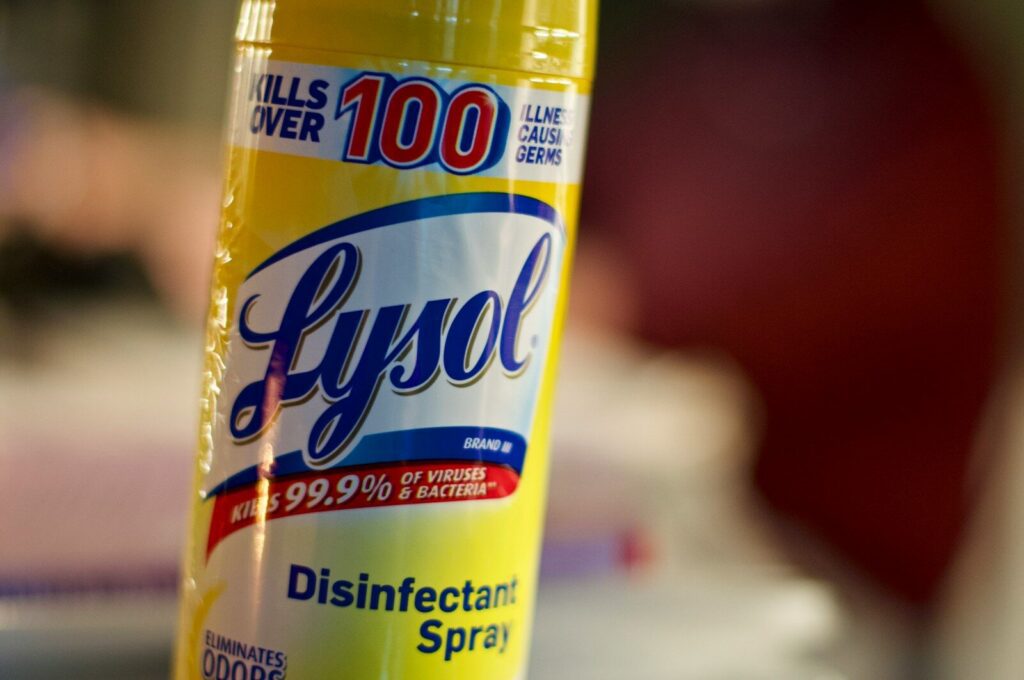
In other words, VOCs aren’t something found in one particular type of product. They’re a broad category of chemicals that can be part of our everyday indoor environment.
And because dogs live in that environment with us, they’re exposed to whatever is in the air around them.
Are Dogs More Exposed To Indoor Chemicals Than We Are?
Dogs breathe the same household air we do, but their daily habits can give them additional opportunities to come into contact with things that settle around the home.
Dr. Karen Shaw Becker, DVM; founder of Proactive Paws, explains,
Because dogs and especially cats live in the same environment as we do, breathe the same air, groom themselves (ingesting contaminants), and often lie on dusty surfaces and floors where pollutants settle… they are at potentially more risk for exposure.
That doesn’t mean dogs are automatically more susceptible to every chemical than people. Rather, they can encounter household substances in different ways. A dog may lie on a floor where something has settled, walk through a treated area and then lick its paws, or spend hours in a room where a product has released chemicals into the air.
Can Indoor Air Affect A Dog’s Breathing?
This is one of the areas where veterinary research provides some useful information.
Researchers at National Taiwan University Veterinary Hospital studied indoor air quality in homes of dogs and cats with naturally occurring respiratory disease. They found a relationship between poor indoor air quality and changes in the dogs’ lower airways.
The study described this as a “hypercellular response.” Put simply, the researchers found more cells than expected in the lower airways of some dogs.
The changes were associated with poor indoor air quality, including increased VOC levels and high levels of fine particles known as PM2.5.

The researchers concluded, “Poor indoor air quality may exacerbate airway disease in pets and should not be ignored in modern society.”
The important word there is “exacerbate,” which means make an existing problem worse. The study does not say that VOCs cause respiratory disease. It suggests that poor indoor air quality may play a role in dogs that already have airway problems.
What Might VOC Exposure Look Like?
There isn’t one particular symptom that tells you your dog has been exposed to VOCs.
Depending on the chemical and the type and amount of exposure, irritation or other effects can potentially include coughing, sneezing, watery or irritated eyes, nasal irritation, vomiting, lethargy or changes in breathing.
But these signs can have many causes unrelated to VOCs. A coughing dog, for example, could have anything from an infection to heart disease to an airway condition.
The circumstances can therefore be important. If your dog suddenly develops irritation or respiratory symptoms after painting, using a strong cleaning product, spraying something in the home or starting a renovation, let your veterinarian know about that possible connection.
Should Dog Owners Be Worried About Candles And Air Fresheners?
Fragranced products are worth considering because they can add chemicals to indoor air.
Dr. Becker says,
Scented candles, plug-in air fresheners, aerosol sprays, perfumes, cleaning products, dryer sheets, scented laundry detergents, and even some building materials all release volatile organic compounds (VOCs) into indoor air.
That doesn’t mean every candle, detergent or air freshener will make a dog sick. The specific ingredients and amount of exposure matter.
But if you’re looking for easy ways to reduce unnecessary chemical exposure, fragrance products are one place to start. You can choose to use fewer of them, avoid spraying products around your dog and provide ventilation when using products that release fumes.
It’s also worth remembering that smell isn’t a reliable measure of safety. Something that smells strong isn’t necessarily more toxic, and something you can’t smell isn’t necessarily free of chemicals.
What About Essential Oils?
Essential oils deserve some separate consideration because “natural” doesn’t necessarily mean safe for dogs.

The ASPCA notes that concentrated essential oils can be harmful to pets depending on the particular oil and how exposure occurs. Problems can be associated with ingestion or contact, and animals can also be exposed to oils released into the air.
If you’re using a diffuser or another essential-oil product around your dog, talk with your veterinarian if you have questions about a specific oil or your dog’s exposure.
Do VOCs Cause Cancer In Dogs?
This is an area where the research needs to be handled carefully.
A 2026 study in Frontiers in Veterinary Science looked at Golden Retrievers with and without lymphoma and measured exposure to several VOCs, including benzene and xylene. Researchers also looked for signs of possible effects on DNA.
The study found measurable exposure and biological changes that warrant further investigation. It did not prove that VOC exposure causes lymphoma, and it did not identify a particular household product as the cause of cancer in any individual dog.
Dr. Becker also points out that some individual VOCs have known health concerns. She says,
Several of these compounds, benzene among them, are known carcinogens in people and have been associated with cancer and other diseases in animals.
That is an important distinction: we’re talking about specific chemicals with documented risks, not saying that all VOCs cause cancer.
What About Low-VOC Products?
Choosing a low-VOC product can reduce the amount of certain chemicals released into the air, but “low-VOC” does not mean zero VOCs or automatically mean a product is completely safe for pets.
The same goes for labels such as “natural,” “green” or “plant-based.” Those terms don’t tell you enough about a product’s potential effects on a dog.
If you’re choosing paint, flooring, furniture or cleaning products for a home with pets, the product’s ingredients, directions for use and ventilation requirements are all worth considering.
Is Home Renovation A Concern?
Renovations are one time when indoor air quality can change significantly.
Paint, varnish, adhesives, flooring, sealants, cabinetry and new furniture can release chemicals into the air, particularly while they’re drying or curing.
The simplest precaution is to keep your dog away from the work area.

Follow the manufacturer’s directions for ventilation, drying and curing, and don’t bring your dog back into the space simply because the smell has disappeared. The product’s instructions are a much better guide than your nose.
Renovation areas also create other risks for dogs, including dust, debris, tools, nails and chemicals, so keeping pets out of the work zone is useful for more than just VOC exposure.
Can An Air Purifier Help?
An air purifier can be helpful, but it’s important to know what it is designed to remove.
A HEPA filter is designed to capture particles such as dust and fine particulate matter. It does not, by itself, remove VOC gases.
Some air purifiers also use activated carbon or other materials designed to capture certain gases. The EPA’s guide to air cleaners explains that filtration performance depends on the type of pollutant and the type and amount of filter material.
For VOCs, reducing the source and ventilating the home when appropriate are still important. An air purifier can be another tool, but it isn’t a substitute for keeping a dog away from fumes or removing an unnecessary source.
At-Home Care: Simple Ways To Reduce Exposure
Dog owners don’t need to eliminate every VOC from their homes. That’s not realistic, and the research doesn’t support treating every household VOC as an immediate danger.
Instead, think about reducing unnecessary exposure.
Use cleaning and household products according to their directions and provide ventilation when recommended. Keep your dog away while you’re spraying products or using something that creates significant fumes.

During painting or renovations, keep your dog somewhere away from the work and follow the manufacturer’s instructions before allowing your dog back into the area.
Consider whether you really need heavily fragranced products throughout your home. And never mix cleaning products unless the manufacturer specifically says the combination is safe.
If you know your dog has been exposed to a chemical, don’t try to determine its safety based solely on how the product smells or whether your dog appears fine immediately afterward.
When Should You Call The Veterinarian?
If your dog develops coughing, breathing changes, vomiting, eye or nasal irritation or other concerning symptoms after a suspected chemical exposure, contact your veterinarian.
Known ingestion, significant contact with a chemical or exposure to concentrated fumes also warrants professional guidance.
Have the product container or label available if possible. Knowing the product, ingredients, concentration, approximate amount, route of exposure and timing can help your veterinarian determine what to do.
For suspected poisoning, dog owners can also contact the ASPCA Animal Poison Control Center or Pet Poison Helpline.
If a dog is having difficulty breathing, collapses, has seizures or is rapidly deteriorating, seek emergency veterinary care.
What Do The Experts Want Dog Owners To Know?
The research around VOCs and dogs is still developing, but there is enough evidence to make indoor air quality worth thinking about, without turning it into something dog owners need to fear.
Dogs share our indoor environments, and veterinary research has found associations between poor indoor air quality and changes in the airways of dogs. Newer research is also examining environmental chemical exposure and its possible relationship to other health concerns.
At the same time, the evidence does not say that everyday exposure to VOCs inevitably makes dogs sick or that household VOCs have been proven to cause cancer in dogs.

For most households, the practical answer is much simpler, be thoughtful about the products you use, ventilate when appropriate, keep dogs away from fumes and renovation areas, and pay attention when a change in your dog’s health happens around a change in its environment.
The air our dogs breathe is part of their everyday environment, too. A little awareness can go a long way without making pet owners afraid of everything inside their own homes.
We’ll be sure to share more details as local veterinarians weigh in.
Your feedback helps us cover this better next time.
Sorry to hear that — what was missing?
Glad it helped!
Get the latest dog events and top stories delivered straight to your inbox.