When Fire Moves Fast, Your Dog Needs a Plan Too
Published August 3, 2026
Fire does not always give families time to prepare.
Members of our family were among the evacuees in the Spokane area during the Old Trails Fire this past weekend, a fast-moving wildland fire that has impacted more than 650 structures. With their dog in tow, they had to evacuate quickly. Despite the best efforts of firefighters and emergency responders, there was little warning before the fire moved into the community.
That experience is a reminder that when it comes to pets and fire, preparation cannot start when the evacuation order comes.
And the threat does not have to be a massive wildfire.
For Nevada families, particularly those living in communities where homes and apartment buildings sit close together, a single structure fire can quickly put people and animals in danger. A dog home alone may have no way to escape. A frightened dog may hide rather than run toward an exit. And even when a pet manages to get outside, it may find itself trapped somewhere dangerous.
Recent fires across Nevada have demonstrated all of those possibilities.
In Sparks, firefighters rescued a dog stranded on a second-story ledge after a fire. In North Las Vegas, firefighters rescued two dogs from an early-morning house fire, while another dog was saved from an apartment blaze in northeast Las Vegas.
But not every story has a happy ending. A house fire in the western Las Vegas Valley killed a dog and hospitalized a woman, while another Las Vegas-area fire killed two dogs while their family was vacationing in Japan.
The circumstances were different. The lesson is the same: your dog’s fire-safety plan needs to exist before there is a fire.
Start With the Escape Plan
Every household should know how the people inside will get out. Pet owners need to make sure the plan works for their animals, too.
Start with the basics:
- Identify at least two possible exits from the home.
- Keep your dog’s leash and harness somewhere they can be reached immediately.
- Keep carriers accessible for smaller dogs and other pets.
- Decide who is responsible for getting the dog out if multiple people are home.
- Identify a trusted person who can help if a fire occurs while you are away.
- Know where you will take your pet if you have to evacuate.
- Practice getting your dog out of the house and into the vehicle.
The last point matters more than it may seem.
A dog that is calm during a normal walk may behave very differently when confronted with smoke, alarms, flames and people rushing around. Practicing the routine can eliminate valuable decision-making time during a real emergency.
For Nevada residents, the plan should also account for wildland fire. Know how you will receive emergency alerts, identify multiple evacuation routes and determine where you can safely take your dog if you cannot return home.
Make Sure Rescuers Know There Is a Pet Inside
If a fire starts while you are away, firefighters may not know an animal is inside unless you give them a way to find out.
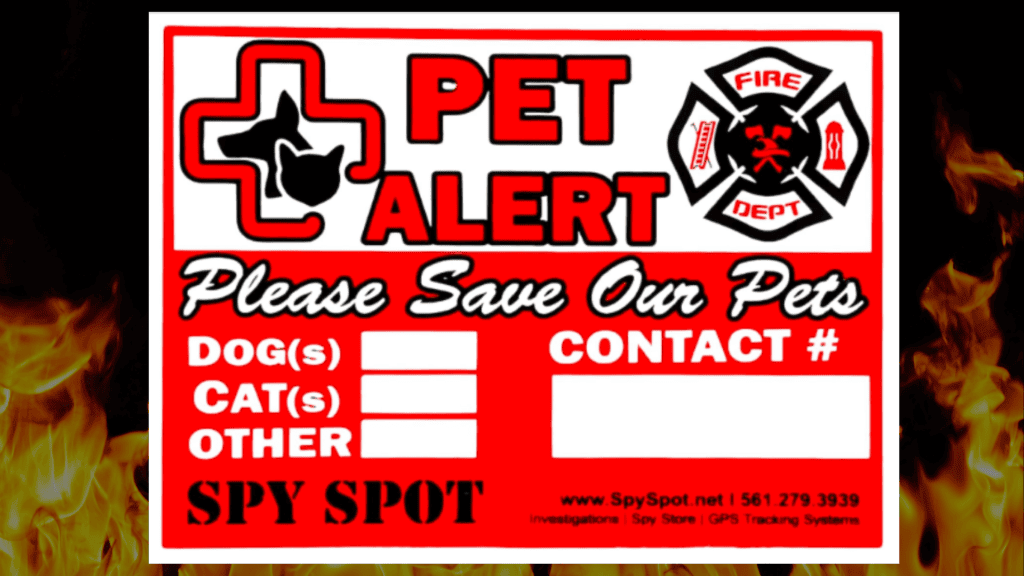
A pet alert decal on a window or door provides a simple visual warning that animals may be inside the home.
One example is this Pet Alert Sticker set, which allows pet information to be added to the decals.
Whatever product you use, keep the information current. If the sticker says there are two dogs inside but one has moved to another home, the information could create confusion during an emergency.
Pet alerts are not a guarantee that firefighters will be able to rescue an animal. Fire conditions can change rapidly, and responders must evaluate whether entering a structure is safe. But giving them information about the animals inside can help them make decisions when conditions allow.
What If Your Dog Is Home Alone?
This is one of the hardest scenarios for pet owners to think about.

A smoke alarm can alert you to a fire, but it cannot tell firefighters that a dog is trapped inside.
The Rescue Retriever Pet Fire Safety Device is one example of equipment designed specifically for this problem. The smoke-activated strobe is intended to provide an additional visual alert to firefighters that dogs or cats may be inside.
It does not replace smoke alarms, monitoring or a pet alert sticker, and it does not physically rescue a pet.
Instead, it adds another layer of information for responders — particularly important when nobody is home.
That layered approach is worth considering because no single product can solve every part of an emergency.
When the Normal Exit Isn’t an Option
Sometimes a pet gets out of the house but cannot safely reach the ground or another area of safety.
The Sparks fire we covered is a good example. Firefighters rescued a dog that had become stranded on a second-story ledge, illustrating how quickly a pet’s escape attempt can turn into another emergency.
Specialized evacuation equipment may provide another option in situations where a conventional exit isn’t accessible.
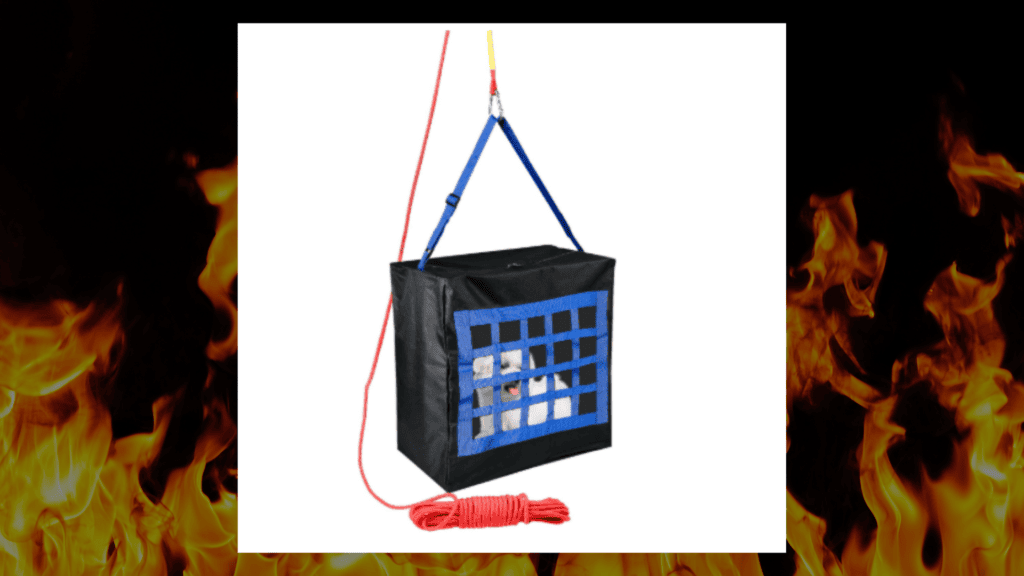
The ISOP Fire Emergency Escape Bag is designed to help evacuate pets in an emergency and includes a 50-foot rope. The medium version is designed for pets up to 55 pounds, while the large version accommodates pets up to 100 pounds.
That larger capacity is particularly relevant for families with bigger dogs, who can be left out of equipment designed primarily for smaller animals.
This is specialized equipment, however, and it should not encourage pet owners to enter a burning or smoke-filled structure or attempt a rescue that puts them in danger. If a pet cannot be safely evacuated, call 911 and tell firefighters where the animal is believed to be.
The goal is to have options — not to turn pet owners into emergency responders.
Build a Pet Emergency Go-Bag
A fire evacuation may last much longer than the drive out of the neighborhood.
A pet emergency bag should be ready to grab along with the rest of the family’s emergency supplies. Depending on the circumstances, it may need to support your dog for several days.
Consider including:
- Food and water
- Food and water bowls
- Medications
- Leash and harness
- Waste bags
- Current veterinary records
- Microchip and identification information
- A recent photograph
- Any necessary medical or mobility supplies
- A familiar comfort item
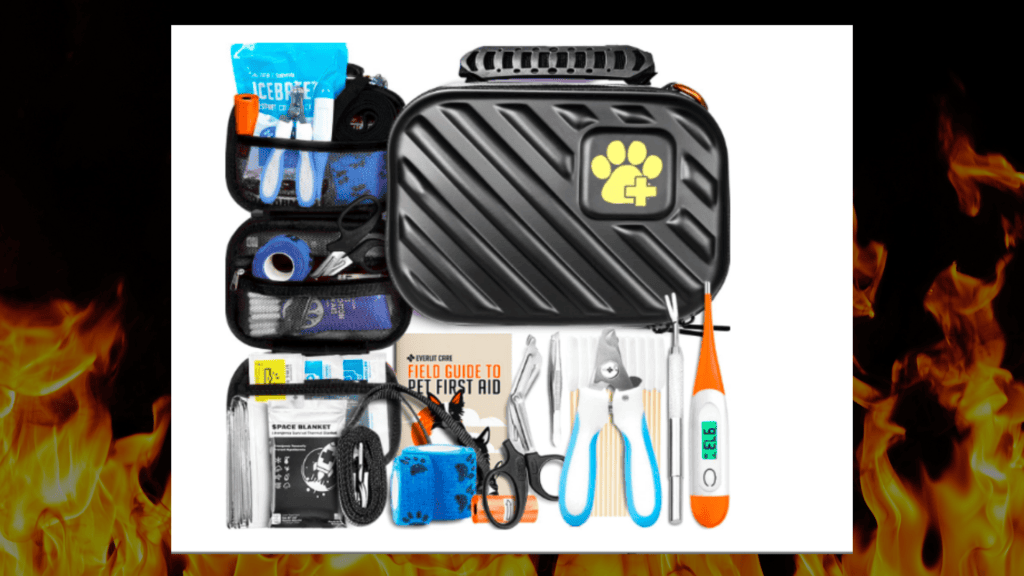
A pet-specific first-aid kit can also be useful. The EVERLIT Pet Medic First Aid Kit, for example, is designed for dogs and cats and can be kept at home, in the car or with travel supplies.
A first-aid kit is not a substitute for veterinary care, but having basic supplies immediately available can be valuable after an evacuation, particularly when pets may encounter debris, unfamiliar surroundings or other hazards.
Don’t Forget Identification
Evacuations create another risk: separation.
A frightened dog can slip a collar, bolt from a vehicle or become separated from its family in the confusion of an evacuation.
Make sure your dog’s microchip information is current and that the phone number on their collar identification is accurate. Keep a recent photo readily available on your phone and with your emergency supplies.
If you have to evacuate quickly, assume your dog may behave differently than normal.
Keep them secured on a leash or harness whenever possible, even if they normally have excellent recall.
Preparation Doesn’t Have to Be Complicated
You cannot control how quickly a fire moves.
You cannot control whether you receive hours of warning or only minutes.
You cannot predict whether the next fire will be a wildfire threatening an entire community or a structure fire that begins in the house next door.
But you can control how prepared you are.
For Nevada dog owners, recent fires provide a very real reminder that this is not simply a disaster-preparedness issue somewhere else. From Sparks to North Las Vegas and communities throughout the state, firefighters have responded to fires where dogs were trapped, stranded or unable to escape on their own.
Know how your dog gets out. Know where the leash is. Have a way to tell firefighters there is an animal inside. Keep an emergency bag ready. Know who can help if you are away. Know where you will go if you have to evacuate.
And practice.
The families affected by the Old Trails Fire did not have the luxury of waiting for the perfect moment to leave. They had to act when the situation demanded it.
For those of us watching from outside the evacuation zone, the most useful thing we can take from an event like this is not fear. It is preparation.
Because when fire moves fast, having a plan may be the one thing you can control.
Your feedback helps us cover this better next time.
Sorry to hear that — what was missing?
Glad it helped!
Get the latest dog events and top stories delivered straight to your inbox.